Mpumalanga
Mpumalanga
A province in northeastern South Africa, Mpumalanga brings together the Drakensberg Escarpment, the Blyde River Canyon, and the savannas of Kruger National Park. A condensed landscape of wild beauty just four hours from Johannesburg.
Mpumalanga is a province in northeastern South Africa, bordered by Mozambique and Eswatini. It concentrates two radically different landscapes: the Drakensberg Escarpment, which plunges toward subtropical lowlands, and the Lowveld savannas where Kruger National Park sprawls. It is one of the country's richest regions for wildlife, panoramas, and natural sites accessible from Johannesburg in less than four hours.
Quick practical facts
- Access: N4 road from Johannesburg (approximately 350 km to Nelspruit/Mbombela, the provincial capital); Kruger Mpumalanga International Airport (MQP) at Nelspruit.
- Recommended duration: 4 to 7 days to combine the Escarpment and Lowveld.
- Best time to visit: May to September (dry season, sparse vegetation, wildlife visible); summer (Nov–Feb) warmer and humid, but verdant landscapes.
- What to wear: light clothing, layers for cool mornings at altitude, sun protection.
- Kruger Park entrance: fee required, online reservation recommended via SANParks.
What to see
Mpumalanga is divided into two distinct zones. The Escarpment (Highveld) offers gorges, waterfalls, and spectacular viewpoints over the cliffs of the eastern Drakensberg. The Lowveld, lower and warmer, is home to acacia savanna and major wildlife reserves. Between the two, winding roads pass through tea, banana, and lychee plantations.
History and context
The name "Mpumalanga" means "where the sun rises" in siSwati and isiZulu. The region was a commercial crossroads between Swazi, Zulu kingdoms, and Boer settlers in the 19th century. The Pilgrim's Rest gold rush (1873) left visible traces: this mining village is now a national monument. The province was created in 1994 during the post-apartheid administrative reorganization.
Highlights of your visit
Blyde River Canyon
The world's third-largest canyon, the Blyde River Canyon stretches for approximately 26 km. The viewpoints at Three Rondavels and God's Window overlook a forested gorge more than 700 meters deep. The canyon is accessible via the R532, a well-marked scenic road.
Kruger National Park
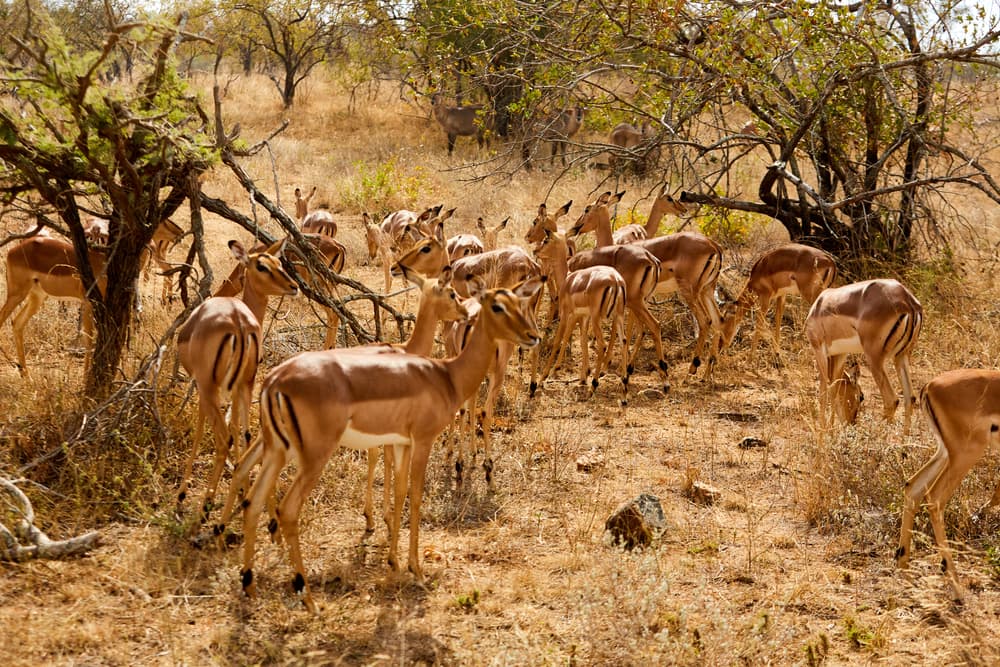
The southern and central sections of Kruger National Park open onto Mpumalanga. The Numbi, Malelane, and Crocodile Bridge gates allow entry into the reserve for spotting the Big Five on self-drive or guided safaris.
Pilgrim's Rest
Pilgrim's Rest is a preserved Victorian mining village, designated a national monument. Its corrugated iron houses and museums chronicle the 19th-century gold fever. The atmosphere is frozen in time, without excessive kitsch.
Mac Mac and Lisbon Waterfalls
Mac Mac Falls (approximately 65 m) and Lisbon Falls (approximately 90 m) are among the most photographed in the province. They are located in the forested zone of the Escarpment, accessible from Sabie.
Hazyview and Sabie
Hazyview serves as a base for southern Kruger; Sabie, surrounded by pine and eucalyptus forests, is the starting point for waterfall routes. Both towns offer accommodations, restaurants, and safari agencies.
Photography tips
- God's Window: golden light early in the morning, before valley mists arrive.
- Three Rondavels: late afternoon for long shadows on the kopjes.
- Kruger Safari: golden hour at dawn and dusk; avoid midday.
- Waterfalls: rainy season (Nov–Feb) for maximum flow, but slippery paths.
- Drones are prohibited in Kruger National Park without SANParks authorization.
Location and access
Mpumalanga is located east of Gauteng. Nelspruit/Mbombela is the province's main city. Kruger Mpumalanga Airport (MQP) receives direct flights from Johannesburg and Cape Town. By car, the N4 from Johannesburg is the main road; the R40 and R532 serve the Escarpment. A rental vehicle is essential: intercity public transport is limited.
Nearby
- Kruger National Park — South Africa's largest reserve, accessible from several Mpumalanga gates.
- Blyde River Canyon — forested gorge with iconic viewpoints over the Escarpment.
- Pilgrim's Rest — classified Victorian mining village, an hour from Nelspruit.
- God's Window — viewpoint over the eastern Drakensberg cliff, vista across the Lowveld.
- Sudwala Caves — Precambrian cave system among the world's oldest, near Nelspruit.
Frequently asked questions
The dry season, May to September, is ideal: vegetation is sparse, wildlife concentrates around water sources, and temperatures are pleasant. Summer (November–February) is hot and humid, but waterfalls are at their peak.
Yes, it's the classic itinerary. Plan 4 to 7 days: two to three days on the Escarpment (Blyde Canyon, waterfalls, Pilgrim's Rest), then two to three days in Kruger via the southern or central gates.
Online booking via SANParks is highly recommended, especially during peak season (July–August) and South African school holidays. Accommodations within the park fill up several months ahead.
For the Escarpment and scenic roads, a standard car is fine. In Kruger National Park, an elevated vehicle (SUV) is recommended on dirt tracks, though main roads are paved.
Technically yes, but a day excursion allows you to see only one site. To enjoy both the Escarpment and Kruger, at least four nights are recommended.
The Lowveld (Kruger zone) is a malaria-risk area, especially in summer. Antimalarial prophylaxis is recommended; consult a doctor before departure. The Escarpment, at higher altitude, carries significantly lower risk.
Want to discover this destination?
Our local advisors design your tailor-made trip.