Pretoria
Pretoria
Just 50 km from Johannesburg, Pretoria merges Boer history, apartheid memory and avenues of blooming jacarandas. A key cultural stop in South Africa.
Strolling through the bustling streets of Pretoria, you'll discover a dynamic city where past and present blend harmoniously. Whether admiring historic monuments, wandering through lush botanical gardens or savoring local cuisine in vibrant markets, each corner of Pretoria reveals a new facet of this fascinating city in constant evolution.
At over 1,300 meters altitude, Tshwane, the City of Jacarandas
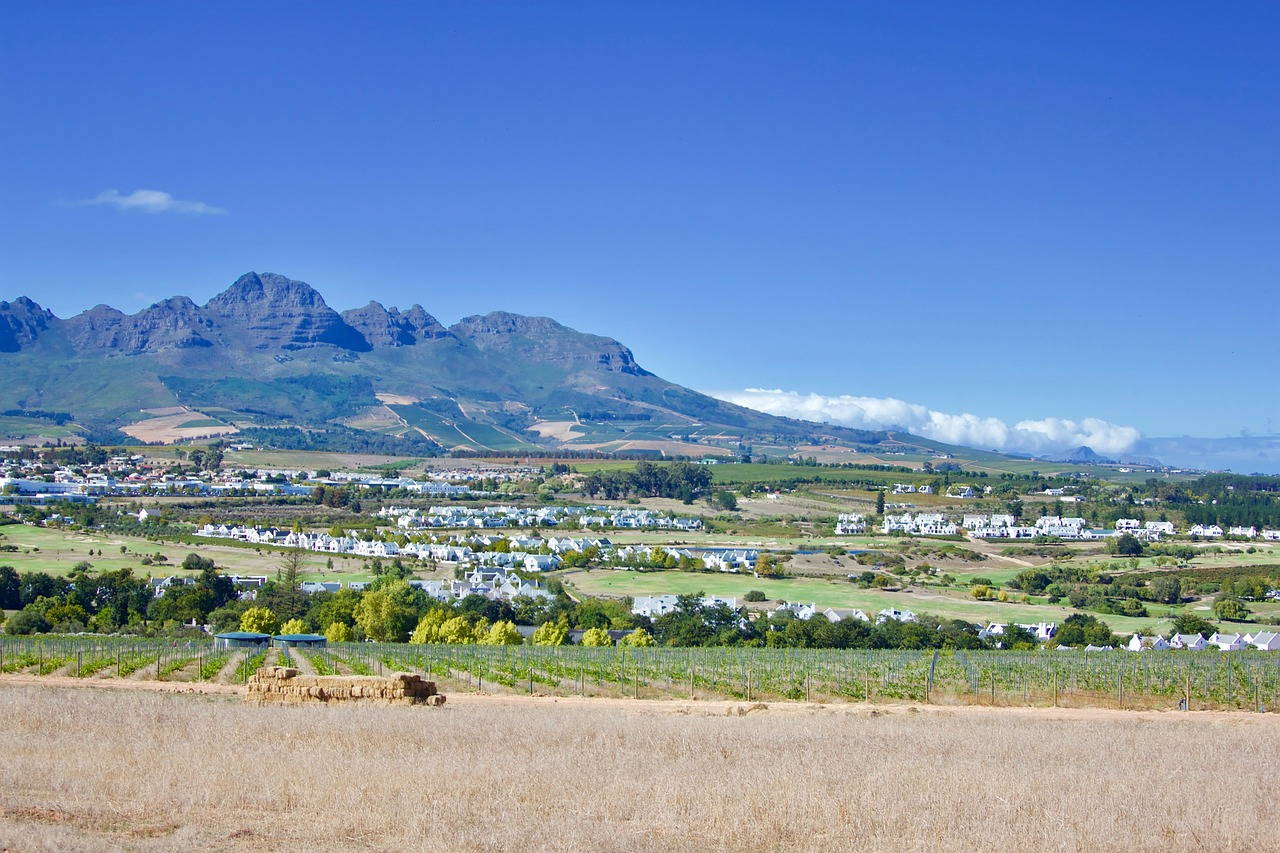
Pretoria stands majestically at an altitude of over 1,300 meters, stretching along the banks of the Apies River and extending into the western foothills of the Magaliesberg to the east.
The locality, also nicknamed Tshwane or the "City of Jacarandas," takes its name from the hundreds of jacarandas that bloom each Southern Hemisphere spring, giving the city its characteristic violet hue.
The city is crossed by a historic railway line, a reminder of the importance of transport in the region's development. Nostalgic steam locomotives still occasionally travel the rails, offering travelers an authentic glimpse into South Africa's railway past.
Administrative center of Gauteng province and capital of South Africa
As a focal point of Gauteng province, Pretoria is today an essential component of a vast metropolitan area established in 2000, spanning 2,199 square kilometers and home to an estimated population of 2.2 million inhabitants.
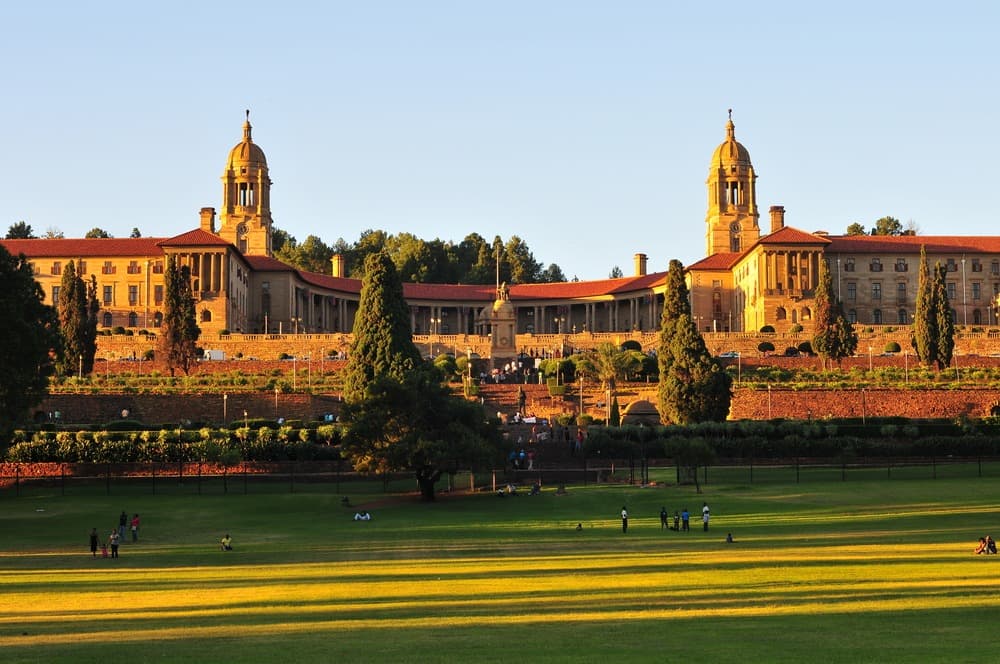
Designated as the country's third capital, Pretoria is the seat of South Africa's executive power. The heart of the city is surrounded by historic buildings such as City Hall and the Palace of Justice, reminding us of Pretoria's importance in the country's judicial history. Nearby, the Union Buildings, designed by architect Sir Herbert Baker, dominate the landscape, symbols of national unity and housing the offices of the South African president.
Since the end of apartheid in the 1990s, the city has undergone significant transformation, becoming increasingly multicultural thanks to the settlement of the new political elite and new Black civil servants.
What to Discover in the City
The Voortrekker Monument
The Voortrekker Monument, located south of Pretoria, is an imposing granite structure erected to honor the Voortrekkers, pioneers who left the Cape Colony between 1835 and 1854. Designed by architect Gerard Moerdijk, the project for this monument was initially discussed on December 16, 1888, during the celebrations of Dingane's Day at Danskraal in Natal, in the presence of Paul Kruger, president of the South African Republic.
Standing 40 meters high with a base of 40 by 40 meters, the Voortrekker Monument features architectural similarities to European monuments while incorporating African influences. Inside, two major points of interest capture attention: the historic frieze and the cenotaph. The dome-shaped Hall of Heroes houses the world's largest marble frieze, composed of 27 bas-relief panels depicting the history of the Great Trek of the Voortrekkers, with details of their daily life, work practices and religious beliefs.
Church Square
Church Square, also called Kerkplein in Afrikaans, is a historic plaza steeped in rich history. Initially established by Marthinus Pretorius, founder of Pretoria, this square was intended to serve as a market and cemetery.
Its name, Church Square, stems from the successive presence of three churches. The first was built in 1856 and consecrated in 1857. It was later replaced by a more imposing structure, unfortunately destroyed by fire in 1882.
Today, Church Square is bordered by several buildings of great historical and architectural importance. Among them are the Palace of Justice, the former Capitol Theatre, the Tudor Chambers, the Ou Raadsaal (former municipal council) and the post office.
The Hatfield neighborhood
Hatfield, a neighborhood located 5 km east of Pretoria's city center, adjoins the main campus of the University of Pretoria. Extending to the famous Church Street (Stanza Bopape section) in the north, bordered on the east by End Street and Richard Street, and bounded to the south and west by the limits of the University of Pretoria, its main thoroughfares include Jan Shoba Street, Francis Baard Street and Pretorius Street.
Known for its guesthouses and vibrant student life, Hatfield is bordered by the neighborhoods of Lynnwood to the east, Arcadia to the west and Sunnyside to the southwest.
The Paul Kruger Statue
This monument commemorates the prominent figure and political and military leader of the Boers, who presided over the South African Republic from 1883 to 1900. Affectionately known as "Oom Paul" (Uncle Paul in Afrikaans), this statue was commissioned and financed in 1896 by Sammy Marks, a South African financier and Kruger's confidant.
This statue, representing Paul Kruger in a presidential jacket, official sash, decorations and topped with a top hat, is surrounded by four Boer sentries and four bas-reliefs illustrating key moments in his career.
Cast in Rome by Francisco Bruno according to the directions of Anton van Wouw, the Paul Kruger statue was first erected without its ornaments in a Pretoria park in 1913. In 1924, it was moved in front of Pretoria station, accompanied by its bas-reliefs and four sentries. Finally, in 1954, it found its current place on Church Square.
Transvaal Museum
Located on Paul Kruger Street, opposite Pretoria City Hall, the Transvaal Museum has attracted science enthusiasts since its founding on December 1, 1892. Its initial objectives were to collect specimens of indigenous animal and plant populations, as well as fossils, minerals and items relating to the history of European settlement, particularly of the Boers and Voortrekkers.
In 1964, the Transvaal Museum was split into two distinct institutions, one dedicated to natural history and the other to ethnology and history. Then, in 1999, it merged with the National Cultural History Museum in Pretoria and the South African National Museum for Military History in Johannesburg to form the Northern Flagship Institution. Today, the Transvaal Museum remains open Monday to Saturday from 9 a.m. to 5 p.m. and Sunday from 11 a.m. to 5 p.m., inviting visitors to explore its vast collections and discover the fascinating natural history of South Africa.
UP University: An English and Afrikaans-language institution
The University of Pretoria (UP) positions itself as one of Africa's leading educational institutions and South Africa's largest university. Its commitment is evident through research oriented toward solutions to the world's most pressing challenges, as well as through the delivery of high-quality teaching adapted to the needs of students, whether in the classroom, online or in communities.
UP also stands out for its bilingual character, offering courses in Afrikaans and English. This approach reflects the linguistic richness of South Africa and promotes access to higher education in students' native languages.
Melrose House
Melrose House, a majestic residence and museum, stands opposite Burgers Park. Built in 1886 by Pretoria's prosperous businessman George Jesse Heys, it takes its name from the renowned Melrose Abbey in Scotland.
Today, Melrose House is a living testament to Victorian and Edwardian architecture. Its richly adorned interior, with its colorful stained glass windows, paintings by English artists, sumptuous carpets, decorated ceilings and fireplaces, as well as precious porcelain ornaments, offers an immersion in the opulence of the era. A large portion of these treasures belonged to the Heys family itself. The museum even houses the room and table on which the Treaty of Vereeniging was signed, thus marking the end of the Second Boer War.
Each year, Melrose House also hosts antique markets, adding an extra touch to its historic charm.
Freedom Park Heritage Site & Museum
Nelson Mandela expressed the idea that we should soon have a place dedicated to the people, a sanctuary called Freedom Park, where we will pay homage with all the dignity they deserve to those who suffered so that we could taste the sweetness of freedom.
Freedom Park, located in South Africa, is an emblematic place dedicated to the memory of victims of apartheid. Its development, realized between 2000 and 2008, was the result of collaboration among three prestigious architectural firms: MMA, Mashabane Rose and GAPP Architects. As a sanctuary of South African heritage, it embodies a space where the country's cultural and historical riches are honored and celebrated.
This park contains several significant elements:
Isivane: This section houses soil from various places where the deceased rest, thus symbolizing their recognition and memory.
Isikhumbuto, the Garden of Remembrance: A wall of names surrounded by water, where according to African belief, spirits find refuge.
The eternal flame: A source of constant light, near a modest chapel.
Moshate: A place reserved for welcoming dignitaries and heads of state.
Hapo Museum: This museum offers an immersive narration of the history of the struggle, using distinctly African modes of storytelling.
Useful Information to Better Plan Your Stay
What Climate Does Pretoria Have?
Thanks to its privileged position in a protected valley, South Africa's administrative capital enjoys a dry subtropical climate with mild temperatures throughout the year.
When to Visit Pretoria?
The best months to travel to Pretoria are the dry months between May and September. Though crowded, the Southern Hemisphere spring, with its mild temperatures and verdant landscapes, is recommended. The blooming jacarandas color the streets in shades of violet and create an enchanting atmosphere throughout the city.
Pretoria Time
Pretoria follows South African Standard Time (SAST), which is 2 hours ahead of Coordinated Universal Time (UTC+2).
Travel from Paris to Pretoria
The nearest international airport to Pretoria is OR Tambo International Airport in Johannesburg. A nonstop flight from Paris to Johannesburg typically takes around 11 hours.
Access from Johannesburg
It's easy to travel from Johannesburg to Pretoria, as the two cities are just 40 minutes' drive from each other.
Want to discover this destination?
Our local advisors design your tailor-made trip.