Johannesburg and Soweto
Gateway to the country on the Highveld at 1,750 m, Johannesburg sets the historical frame for any South African journey in 48 hours, from Soweto to the Cradle of Humankind.
Johannesburg sprawls across the Highveld at 1,750 metres altitude, which explains its dry climate, cool winter nights and sudden dry thunderstorms in late afternoon summer. The city was born from the 1886 gold rush and remains marked by this mining history: the yellow mine dumps on the southern periphery, the old galleries of Gold Reef City, the towers of the Sandton financial district that replaced those of the abandoned city centre in the 1990s.
Our team rarely presents it as a destination in itself, but as a gateway that deserves 24 to 48 hours rather than a transit stop. The historic centre, long neglected, has seen several vibrant pockets reawaken: Maboneng around Arts on Main, Braamfontein on Saturdays with the Neighbourgoods Market, Newtown and its Museum Africa. These neighbourhoods are best explored with a guide who knows the streets, as safety awareness operates at the block level.
Soweto, to the south-west, is home to around 1.3 million people spread across roughly twenty townships merged since the 1930s. Much of South Africa's 20th-century political history played out here: the students' uprising against instruction in Afrikaans on 16 June 1976, documented at the Hector Pieterson memorial in Orlando West; Nelson Mandela's house on Vilakazi Street, now a museum, just hundreds of metres from Desmond Tutu's; the painted cooling towers of Orlando, which have become a bungee-jumping venue. A visit by bike or tuk-tuk with a local resident transforms your perception: you eat kota (bread hollowed out and filled with chips, sausage and cheese) at a Vilakazi shisa nyama, cross through Diepkloof and Meadowlands, and come to understand the internal social stratification of the township.
The Apartheid Museum, near Gold Reef City, warrants two to three hours and is essential background before the Cape, Robben Island or District Six. The exhibition separates visitors at the entrance according to a random card marked "white" or "non-white", then unfolds the 1948-1994 period with dense audio and visual archives. The Constitution Hill memorial, in the city's former prison, complements this with a legal perspective.
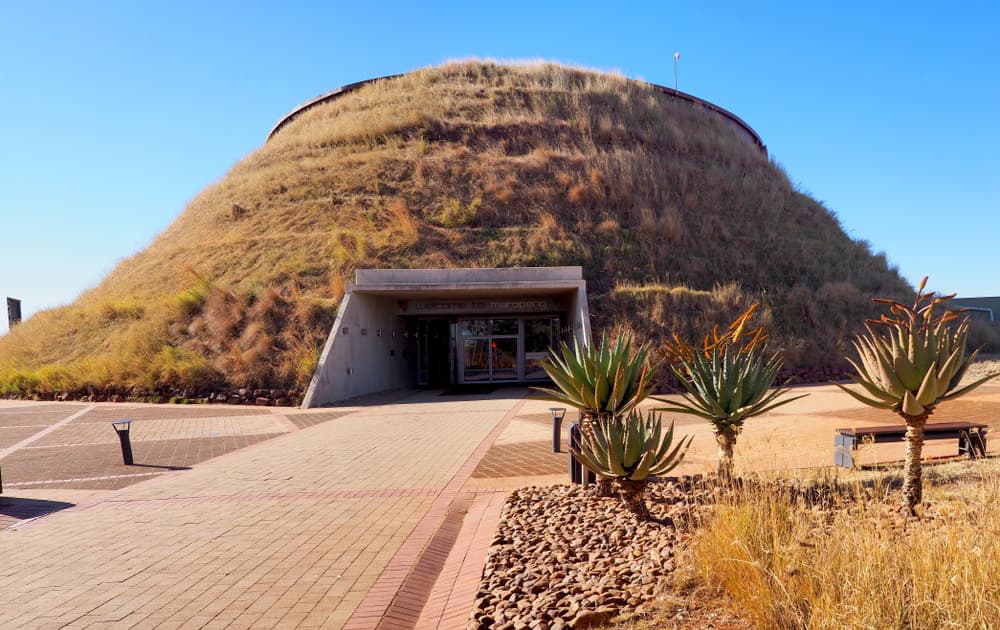
Fifty kilometres north-west, the Cradle of Humankind has been a UNESCO World Heritage Site since 1999. The Sterkfontein Caves yielded the remains of the australopithecine "Mrs Ples" and the nearly complete skeleton of "Little Foot", dating back 3.3 million years for the oldest. The Maropeng interpretation centre is designed for families; the caves themselves, more raw and untamed, appeal chiefly to travellers with an interest in palaeoanthropology. Half a day suffices, and you can combine it with lunch at the Walter Sisulu Botanical Garden in the Crocodile River gorge.
On the living culture front, Johannesburg hosts the country's densest arts scene: Goodman Gallery and Stevenson in Parktown North, Wits Art Museum, the Market theatre in Newtown, the Joy of Jazz festival in September. Dining here is more international than in the Cape, with a strong presence of Zimbabwean, Congolese and Mozambican cuisines in the Yeoville and Rosettenville neighbourhoods.
What to discover
Vilakazi Street and Hector Pieterson. A morning in Orlando West, on foot or by bike, between Mandela's house-museum and the 1976 schoolchildren's memorial. Kota lunch at a neighbourhood shisa nyama.
Apartheid Museum. Two to three hours of chronological exploration from 1948 to 1994, with filmed archives and reconstructions. Best done before the Cape to frame the rest of your journey.
Maboneng and Braamfontein. Saturday morning at the Neighbourgoods Market in Braamfontein, then galleries and cafés around Arts on Main in Maboneng. The best contemporary read on the city.
Cradle of Humankind. The Sterkfontein Caves, where 3.3-million-year-old australopithecine fossils were discovered, and the Maropeng centre. Half a day, 50 km from the centre.
Constitution Hill. The Old Fort's former prison, where Gandhi and Mandela were jailed, now transformed into the seat of the Constitutional Court. A legal complement to the Apartheid Museum.
When to go
The Highveld enjoys a temperate, dry climate. From April to August, days are sunny and cool (18 to 22 °C during the day), but nights drop to 2–5 °C in June–July and morning frost is common: bring a fleece. This is the best period for Soweto visits and urban walks, without rain and with clear skies.
From November to March, the Highveld's rainy season arrives: almost daily thunderstorms in late afternoon, brief but intense (often 20 to 40 mm in an hour), sometimes with hail. Daytime temperatures reach 25–28 °C. This season remains manageable for a 1 or 2 night stay, provided you plan visits for the morning. September–October, the transitional months, offer a good compromise: mild temperatures, jacarandas in bloom in early October in the Houghton and Parktown neighbourhoods.
Practical advice
We recommend 1 to 2 nights on the ground, which allows you to combine a half-day in Soweto, a half-day at the Apartheid Museum or Constitution Hill, and possibly an excursion to the Cradle of Humankind. O.R. Tambo airport is the country's main international hub and the natural entry point for most of our itineraries. From Johannesburg, Kruger Park is accessible in 5 hours by road or 1 hour by domestic flight to Skukuza or Hoedspruit, making it the most common next leg. Another logical combination: 2 nights in Johannesburg, then a flight to Durban for KwaZulu-Natal and the Drakensberg, before heading further or looping back to Cape Town.
Hotel comfort ranges from boutique hotels in Rosebank or Melrose Arch to urban lodges in Maboneng. We avoid isolated accommodation and favour neighbourhoods with nearby amenities. Travel is by private vehicle with driver, never by public transport. Johannesburg appeals to travellers interested in contemporary history, art and the African city in transition, rather than families seeking relaxation. For a first visit to South Africa, this is the stopover that gives historical depth to everything else.