Johannesburg
Johannesburg
From Mandela's struggle to the creative scene of Maboneng, Johannesburg unfolds like a living guide to contemporary Afrique du Sud.
Nightclubs, magnificent zoos, luxury hotels in Rosebank, countless fossils from the Cradle of Humankind… Johannesburg, a city of a thousand faces, draws millions of visitors. Step into the attractions of this destination.
Its residents call it Jo'burg or The City of Gold. A name destined for this world-famous city known for the trade in gold and diamonds. Johannesburg is undoubtedly the economic heartbeat of Afrique du Sud. Business districts, glass towers, shopping centers, and wide, congested streets announce a city that never stops. Yet beneath this relentless prosperity, Johannesburg reveals itself as an innovative destination, vibrant with music and artistic creativity. You'll visit extraordinary places, such as the Cradle of Humankind, a UNESCO World Heritage Site. You'll encounter major wildlife stars at the Johannesburg Zoo or Lion Park. Singles can dance, drink, and unwind in the nightclubs of Melville and Sandton. Book your flight to Johannesburg now and discover what you expect from a dream journey to Afrique du Sud.
A Touch of History
The city's founding is rooted in the gold rush. In 1884, the owner of the Vogelstruisfontein farm suspected his land harbored a significant gold deposit. When an investigation confirmed this suspicion, British authorities quickly built a city around the site, naming it Johannesburg. The name is sometimes rendered as Joburg or Jozi, meaning city of gold. From 1910 onward, the rush for this precious metal sparked explosive population growth, fueled by the arrival of white settlers. The image of exhausted miners toiling along the Witwatersrand remains etched in memory.
Starting in the 1920s, black miners' fortunes darkened with the implementation of the apartheid regime. British colonists decreed people of color to be of inferior race. The system established systematic inequality. Whites occupied the towers and offices of the business district, while indigenous populations filled the township of Soweto. Though blacks were permitted to settle in Johannesburg, it was purely out of necessity; the government needed vast labor forces to sustain the gold trade. Yet this exclusion was deeply painful, even as blacks gained residence in certain areas. White children attended English-language schools, black children those where Afrikaans was the language of instruction. Whites held management positions; Indians, mixed-race people, and blacks performed unskilled, poorly paid manual labor.
Protests against this unjust and tyrannical regime sparked bloodshed in Johannesburg. The Apartheid Museum and the African National Congress stand as reminders of Nelson Mandela's struggle against racial segregation.
Today
Was Johannesburg born for tourism? Apparently not. When people think of tourism in Afrique du Sud, names that come to mind are Kruger National Park, Table Mountain, and Cape Town's sandy shores. Known as the country's premier industrial and commercial metropolis, the city of gold is far less recognized as a vacation destination. Yet an undeniable charm emanates from Johannesburg's streets. Such artistic originality, such proudly embraced Africanism in its music, such enthusiastic and vibrant youth! Luxury tourism offered by five-star hotels pairs with exploratory tourism—visiting bohemian suburbs with a relaxed, convivial atmosphere. Fine zoos invite privileged time with wildlife. Johannesburg is all of this at once.
Located in the northwestern part of the country, in Gauteng province, Jo'Burg is home to 5.6 million residents. Inseparable from its surrounding areas, the broader metropolis encompasses 10.5 million inhabitants. Tourism is growing rapidly.
Must-See Attractions in Johannesburg
To guide your itinerary planning, discover in this practical guide the must-sees of Jo'Burg.
Archaeological Heritage
- The Cradle of Humankind
Located roughly thirty kilometers from downtown, the Cradle of Humankind—literally the "Birthplace of Humanity"—is a world-class archaeological site. It houses approximately thirty limestone caves within which thousands of hominid fossils have been unearthed. Among the most significant discoveries are the skull of the Taung child and the skeletons of Homo Naledi, an ancient hominid species long extinct. The age of the site's oldest fossils surpasses even that of the famous Lucy. Designated a UNESCO World Heritage Site in 1999, the Cradle of Humankind invites you to delve into the origins and evolutionary stages of humanity.
Cultural Heritage
Lesedi Cultural Village: A stay at Lesedi is essential for truly appreciating Jo'burg's musical, theatrical, and cultural traditions. Each year, the village hosts, among other events, an international jazz festival covered by world media.
Natural Heritage
- The Johannesburg Zoo: This celebrated zoo ranks among Afrique du Sud's largest zoological parks. Nearly two thousand animals live here in captivity. Beyond massive mammals like leopards, lions, elephants, and rhinos, you'll observe zebra and giraffe herds roaming vast grazing grounds. Whether accompanied by children or not, you'll appreciate hand-feeding young white lions raised in the park, watching them play, or gathering at a watering hole.
- The Suikerbosrand Nature Reserve: Cliffs, expansive grasslands, and a river make Suikerbosrand a cherished refuge for hikers. Ideal for observing wildlife in its natural state.
- The Rhino & Lion Nature Reserve: Located within the Cradle of Humankind, this reserve is regularly visited by students, biologists, and ecotourism enthusiasts. Beyond its recreational purpose, Rhino & Lion serves as a breeding center dedicated to protecting and preserving endangered species, including white lions and Bengal tigers.
- Lion Park: Beyond the Johannesburg Zoo, Lion Park is a prime destination for observing wild fauna. It adjoins Lesedi Cultural Village. Nearly 80 lions have found refuge here, coexisting with smaller mammals. It's one of the best places to spot the white lion, an exceptionally rare feline.
Museums and Monuments
The Nelson Mandela Museum: Visiting the Nelson Mandela Museum in the Soweto township is among the must-dos during your Johannesburg trip. Relive the defining moments of apartheid through photographs and manuscript collections. Step into Nelson Mandela's intimate world. The museum is housed in the family home where the former president lived before his imprisonment;
Gold Reef City: The gold mining site has been converted into a historical museum. It offers an in-depth portrait of miners' conditions in the nineteenth century. You'll also find an Olympic-sized children's playground;
The Apartheid Museum: The exhibition covers 1910 to 1994, when racial segregation laws were enforced in Afrique du Sud. An atmosphere of sadness pervades the building. Walls are dark, the floor is bare concrete, galleries extensively display apartheid's social and economic divisions.
Africa Museum: History and paleontology enthusiasts will find plenty to enjoy. Beautiful cave paintings.
The Johannesburg Art Gallery: Unlike those in the Africa Museum, works here are more contemporary, signed by major Western and South African painters.
Markets
A trip to Johannesburg also means stepping into a shopping paradise. Love fashion? Head to Nelson Mandela Square or Sandton City. Upon exiting one of the brand boutiques there, you'll be Johannesburg's most stylishly dressed person. To gather souvenirs, explore Rosebank's flea market or Oriental Plaza.
When to Visit Johannesburg?
Johannesburg enjoys a Mediterranean-like climate. While summers are hot and dry, winters are cool and occasionally accompanied by intense rainfall. Seasons are opposite to those in Europe. The ideal period for outdoor activities runs from June to August. Museums and zoos are empty, allowing peaceful visits away from mass tourism. From November onward, temperatures become truly unbearable.
By Air
Foreign travelers arrive by plane at Johannesburg's international airport, officially named Oliver Reginald Tambo. The distance between the airport and downtown is approximately thirty kilometers. By hailing a taxi, you'll reach your hotel for 300 to 400 rands.
By Rail
Johannesburg's railway station is easily located on Wolmarans Street. Express train lines connect the bus station and airport in 15 minutes.
Attractions in Johannesburg
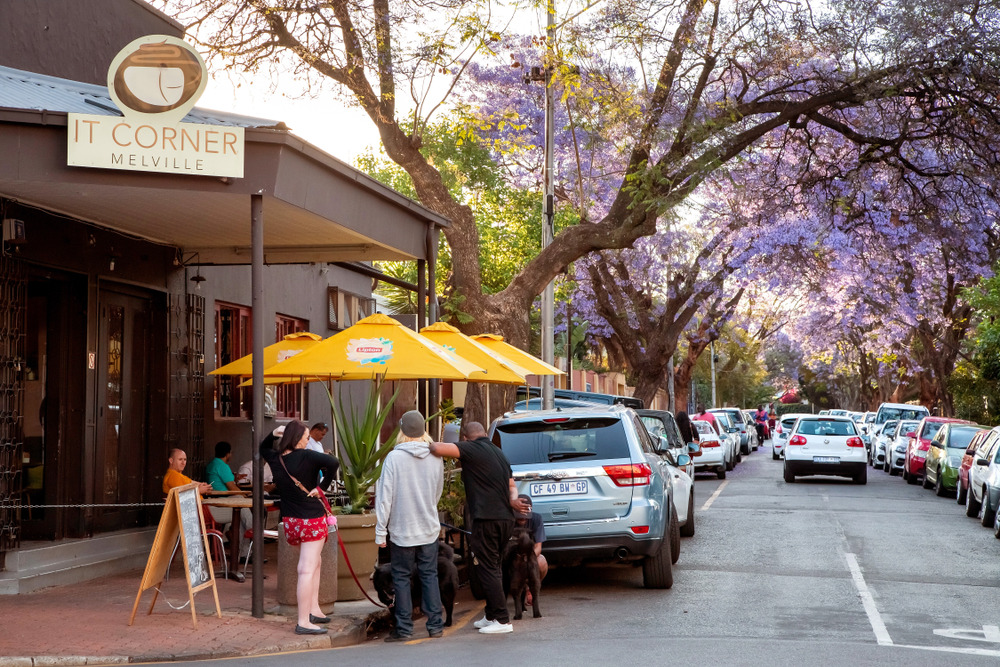
Quartier de Melville, Johannesbourg
Fondé en 1896 dans le sillage de la ruée vers l'or, Melville est l'un des quartiers les plus animés du nord de Johannesbourg, entre 7th Street, maisons victoriennes et réserve naturelle.
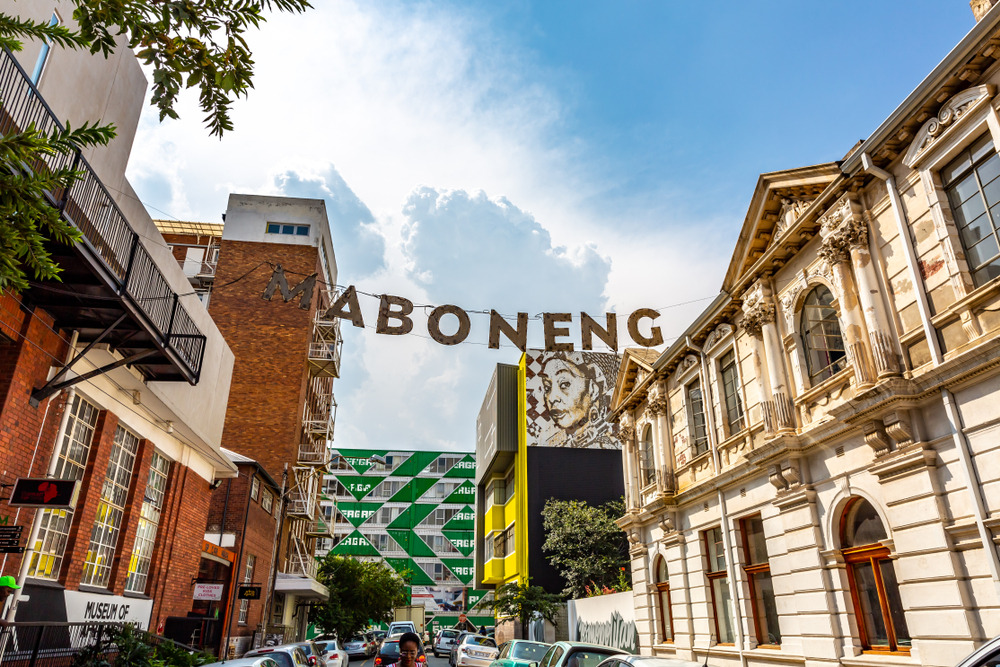
Maboneng, un nouveau Brooklyn à la sauce sud
Quartier créatif né de la réhabilitation d'entrepôts à l'est du CBD de Johannesbourg, Maboneng concentre galeries, théâtres et marché dominical.
Accommodation in Johannesburg
Want to discover this destination?
Our local advisors design your tailor-made trip.