Victoria & Alfred Waterfront
Victoria & Alfred Waterfront
A former Victorian harbor basin at the foot of Table Mountain, the V&A Waterfront blends maritime history, aquarium, artisanal markets, and departure point for Robben Island.
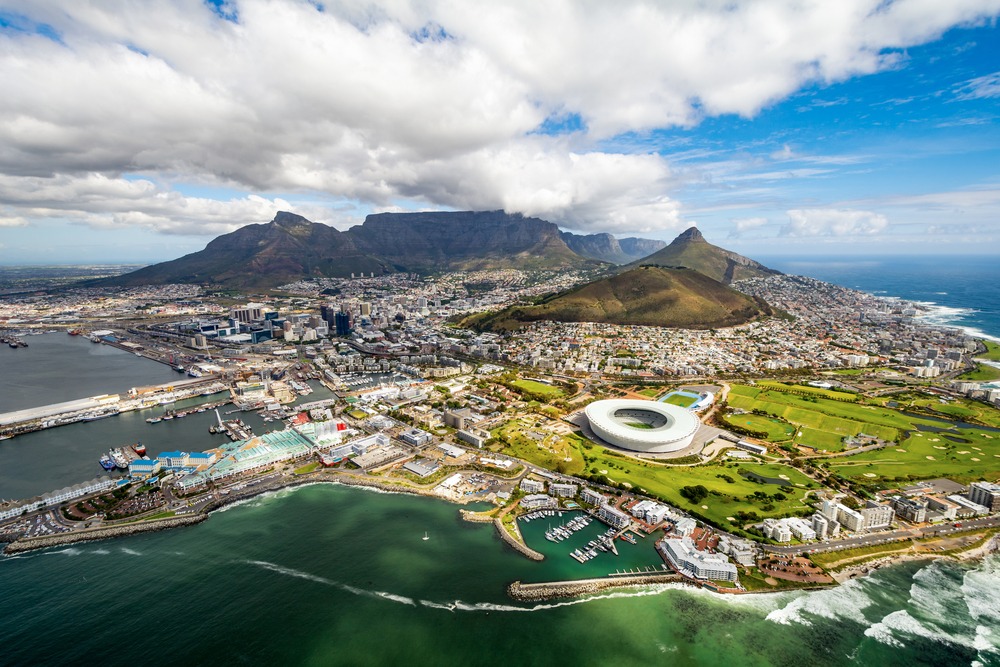
The Victoria & Alfred Waterfront occupies Cape Town's historic harbor basin, nestled at the foot of Table Mountain. This vibrant waterfront brings together boutiques, restaurants, museums, and boat departures to Robben Island within a setting where heritage cranes stand alongside modern yachts. It ranks among the most visited destinations in Afrique du Sud, equally popular with locals and international visitors.
Practical information at a glance
- Access: Located approximately 3 km from Cape Town's city center; MyCiTi rapid bus service from Cape Town Station, taxis, and Uber available.
- Entry: Waterfront access is free; interior attractions (Two Oceans Aquarium, museums) charge admission.
- Recommended duration: half-day to full day depending on chosen activities.
- Wheelchair accessibility: Promenades and main pathways are wheelchair-accessible.
- Dress code: No dress restrictions.
What to see
The Waterfront centers around two historic basins — Victoria Basin and Alfred Basin — still in partial operation. Home to the Two Oceans Aquarium, showcasing marine life from the Atlantic and Indian oceans, the Victorian Clock Tower dating to 1882, and Nobel Square, a plaza honoring South Africa's four Nobel Peace Prize laureates.
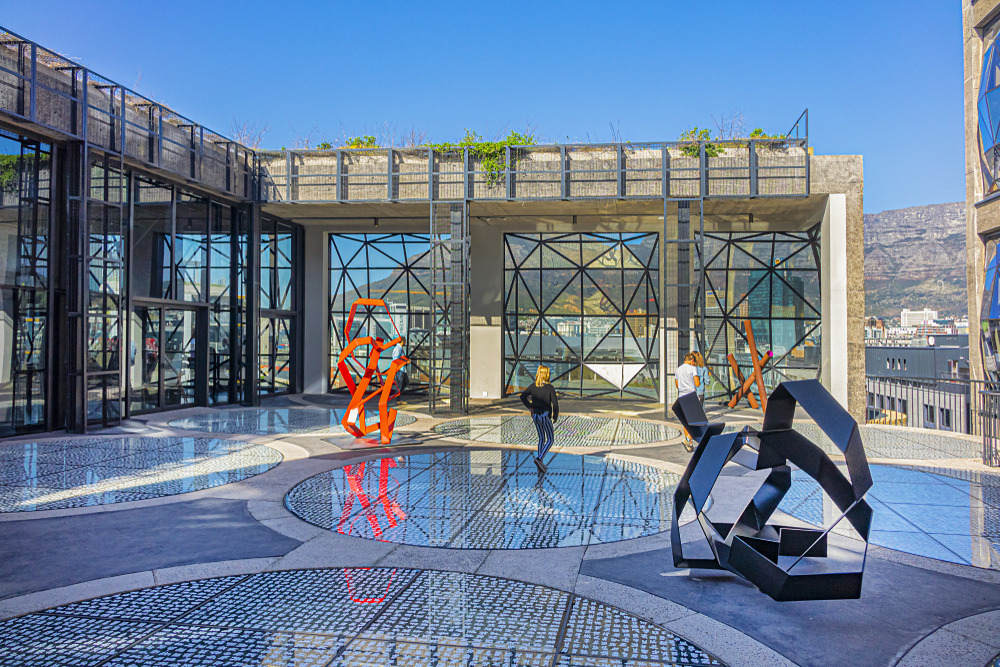
The complex also features art galleries, covered artisanal markets, cinemas, and a dense concentration of restaurants serving fresh seafood, African cuisine, and international gastronomy.
History and context
Cape Town's port opened in 1860 during Queen Victoria's reign. The Alfred Basin, the first to be excavated, took its name from the Queen's son. Long the economic heart of the city, the site declined with modern port expansion. Its reinvention as a tourist and commercial destination began in the 1980s and accelerated after 1994, transforming the Waterfront into a symbol of post-apartheid Cape Town's renaissance.
Highlights of your visit
Two Oceans Aquarium
The aquarium showcases species from the two oceans flanking Cape Town. The predator tank — featuring sharks and rays — and the underwater tunnel stand as the main attractions. Certified scuba divers can experience shark diving sessions.
Nobel Square
Four bronze statues pay tribute to Albert Luthuli, Desmond Tutu, F.W. de Klerk, and Nelson Mandela. The plaza offers a solemn and historically charged setting overlooking the basin.
Clock Tower and Port Museum
The octagonal cast-iron Clock Tower is one of the few surviving original port structures. The adjacent museum traces Cape Town's maritime heritage through scale models, navigation instruments, and archival photographs.
Markets and craftsmanship
The Watershed, a permanent covered market, gathers local creators: jewelry, textiles, ceramics, and artisanal food products. The offerings are substantially more refined than typical street souvenirs.
Departures to Robben Island
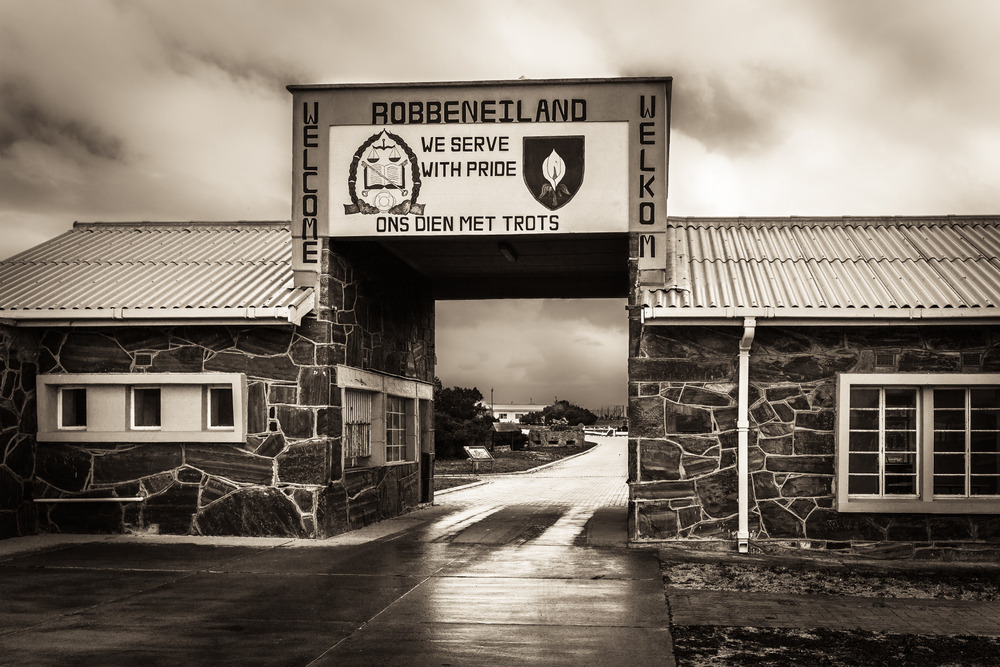
The ferry terminal for Robben Island is located at the Waterfront. The crossing takes approximately 30 minutes. Advance booking is strongly recommended, as tickets sell out quickly.
Photography tips
Morning light is ideal for photographing the Clock Tower and basins with Table Mountain as backdrop, before mist rolls in. In the evening, reflections of harbor lights on the water create compelling compositions. From the quayside, frame the mountain between the masts of moored sailboats.
Location and access
The Waterfront sits in the harbor district, west of the city center (City Bowl). The MyCiTi shuttle connects the central station to the Waterfront within a few stops. Covered parking is available on-site. Pedestrian access from the De Waterkant neighborhood takes roughly ten minutes on foot.
Nearby attractions
- Robben Island — the prison island where Nelson Mandela was held for 18 years; accessible only by ferry from the Waterfront.
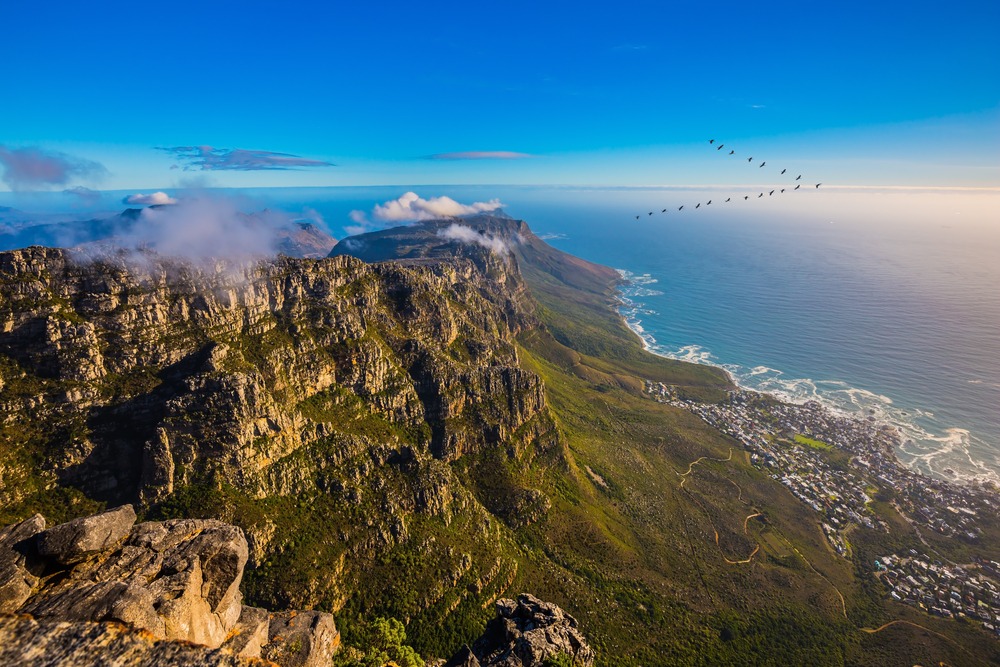
- Table Mountain — the rotating cable car departs from the western side; panoramic views across the peninsula and bay.
- Bo-Kaap — vibrant neighborhood of colorful homes and Malay-Cape heritage, 15 minutes' walk to the east.
- De Waterkant — trendy quarter with cafés and galleries, between the Waterfront and city center.
- District Six Museum — memorial to apartheid-era forced removals, located downtown.
Frequently asked questions
Access to promenades, quays, and outdoor spaces is free. Attractions such as the Two Oceans Aquarium, museums, and ferries to Robben Island require payment.
Tickets can be reserved online through Robben Island's official website or at the ferry terminal ticket office at the Waterfront. Advance booking is highly recommended, especially during peak season (December–January).
The Waterfront is open year-round. The Southern Hemisphere summer (November to March) offers the longest and sunniest days. Outside the December–January holiday period, crowds are more manageable.
Absolutely. The Table Mountain cable car departs from approximately 10 minutes by car or Uber from the Waterfront. Allow a half-day for each site; the two combine easily into a full day of exploration.
The Waterfront precinct is well-patrolled and considered one of Cape Town's safest public spaces. Standard precautions apply: avoid displaying cameras and phones ostentatiously.
The Waterfront hosts dozens of restaurants and cafés, ranging from fresh seafood to world cuisines. The Watershed market also offers artisanal street food stalls.
Nearby
Interested in this visit?
We can include it in your personalised itinerary.