Mac Mac Falls
Mac Mac Falls
A double waterfall of 70 meters located 13 km from Sabie, created by gold prospectors who dynamited the streambed in 1873. Designated as a national monument.
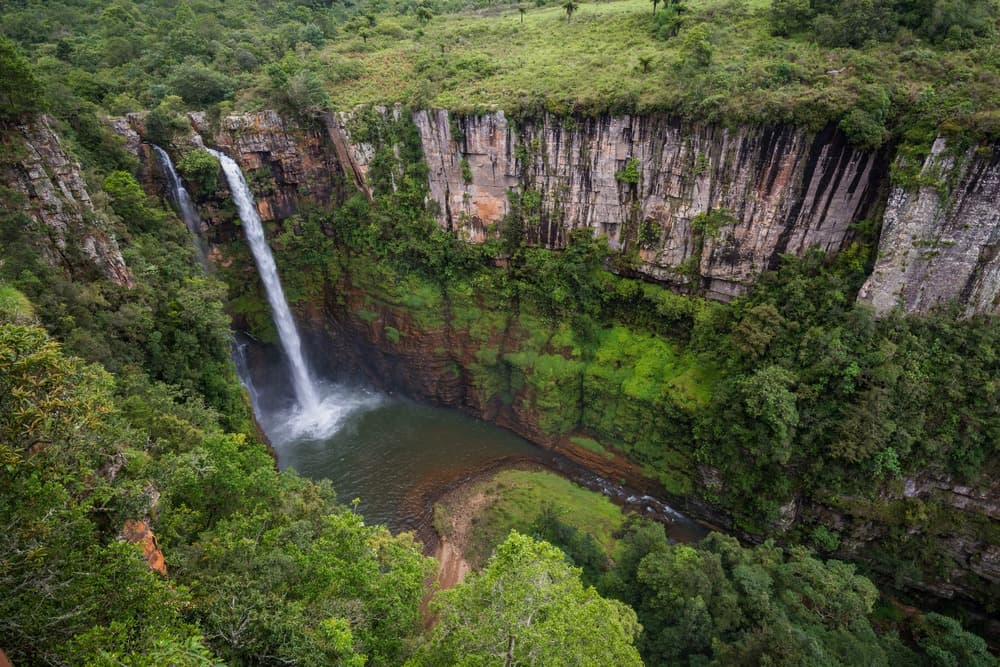
Mac Mac Falls forms a 70-meter plunge into a narrow gorge before joining the Sabie River. Located 13 km from Sabie town center, in Mpumalanga province, northeast of South Africa, the falls are accessible via the R532, which follows the scenic route. Designated as a national monument, these twin cascades tell as much about the region's geological history as they do about South Africa's 19th-century gold rush.
Why visit Mac Mac Falls
The site combines several attractions within a compact area. The double waterfall, created by human intervention in the 19th century, presents an unusual configuration in South Africa. The surrounding forest of pines and indigenous trees shelters diverse birdlife, including the secretary bird that gave its name to the interpretation trail. The site is well-developed for visitors, with a viewpoint overlooking the gorge, braai facilities, and access to a natural pool.
The stop fits naturally into the Sabie Falls Route, which groups several waterfalls accessible by car over half a day. Mac Mac Falls is one of the best-known stops, thanks to its height and historical significance.
History: from gold rush to national monument
Between 1840 and 1870, gold deposits were discovered in the rocky crevices carved by the streambed. The region quickly attracted prospectors from across southern Africa and Europe. The mining camp, initially named New Caledonia Gold Camp, was renamed Mac Mac following the arrival of a large number of Scottish miners — a nod to the many surnames beginning with "Mac-" present in the camp.
Originally, the falls formed a single cascade. In 1873, miners dynamited the streambed to access gold quarries upstream. This operation split the waterfall into two parallel streams, a configuration still visible today. The falls have since been designated a national monument, both for their natural value and their role in the region's mining heritage.
What to see on site
The viewpoint overlooking the double cascade
A viewing platform offers observation of the falls from the gorge's edge. Safety railings protect access; for photography, a compact lens passes more easily through the mesh than a bulky reflex camera.
The Secretary Bird Trail
This 3 km interpretation trail is named after the secretary bird, a diurnal raptor measuring between 1.25 and 1.5 meters, recognizable by its gray plumage barred with black on the tail feathers. The walk is accessible and requires no technical equipment. You may also observe various robin species, blackbirds, thrushes, and bulbuls.
Natural pool and picnic area
Below the main site, a basin allows swimming when water levels permit. Braai facilities are arranged nearby, making it a popular weekend stop for South African families.
Practical information
- Allow 1 to 2 hours on site for the viewpoint and Secretary Bird trail; longer if you plan swimming and picnicking.
- A modest entrance fee is collected upon arrival for site maintenance.
- Bring good hiking shoes, water, and sunscreen in summer.
- The site is open to the elements: in case of storms, frequent in the afternoon during the wet season, access to the viewpoint can become slippery.
When to visit
Southern summer, between November and February, coincides with the rainy season in Mpumalanga. Waterfall flow is most powerful then, and vegetation reaches its peak. It's also when the trail offers the most striking landscapes. Southern winter (June-August) is drier and cooler, with reduced flow but more stable light for photography. Avoid midday afternoon hours in summer due to thunderstorm risk.
How to get there
Mac Mac Falls is located 13 km north of Sabie town center, along the R532, the scenic route that also serves the Blyde River Canyon. From Sabie, the road is paved and well-signposted. Without a vehicle, the simplest option is to arrange an excursion through a local operator or your accommodation. Sabie is roughly 4.5 hours' drive from Johannesburg, the most convenient international arrival point.
Nearby attractions
Mac Mac Falls is part of a network of attractions accessible in a single day:
- Maria Shire Falls, Graveyard Falls and Forest Falls: other waterfalls along the route, within a few kilometers.
- Pilgrim's Rest: a former mining village now a heritage site, renowned for its textile craftsmanship and silk workshops.
- The Blyde River Canyon and its rock formations, accessible by continuing north on the R532.
- For other parks and reserves in the region, see the Sabi Sand Game Reserve, roughly 1.5 hours' drive away.
Frequently asked questions
Frequently asked questions
To incorporate Mac Mac Falls into a comprehensive itinerary including the scenic route, Blyde River Canyon, and Kruger Park, consult our South Africa tours.
Interested in this visit?
We can include it in your personalised itinerary.