South Africa Family Trip with Children: Our Guide to a Successful Road Trip!
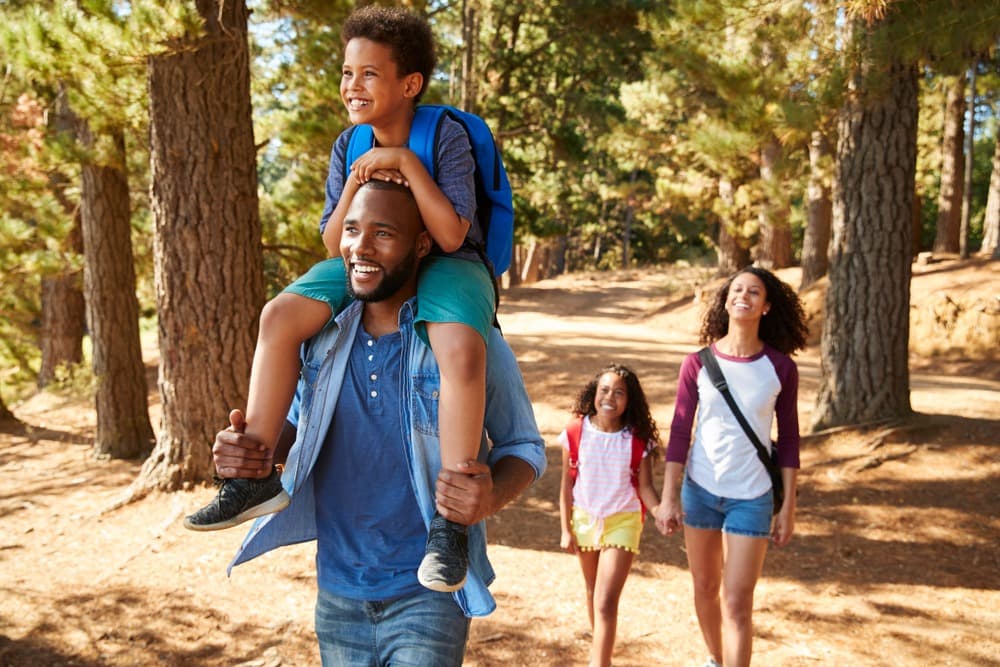
Thinking about visiting South Africa with your family? Go for it! It's an ideal destination for traveling with children.
Thinking about visiting South Africa as a family? Go for it! It's an ideal destination for traveling with children. Paradisiacal beaches, cities with a rich historical past, whales, Big Five... From family safaris to cultural visits: discover the must-sees of the Rainbow Nation – and practical information to prepare your trip well.
Activities for the whole family

Spotting exceptional wildlife
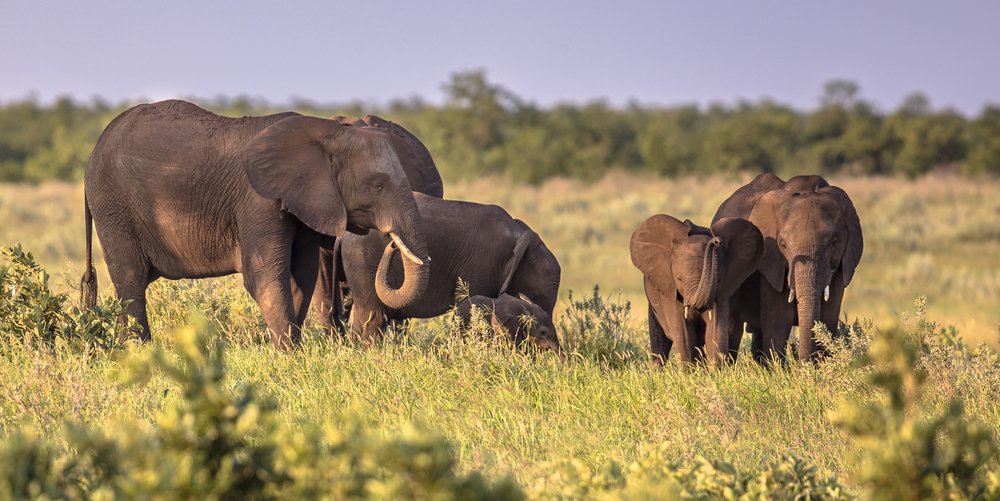
South Africa is an ideal destination for traveling with children, as it is home to cetaceans off its coasts, as well as numerous mammals on its territory – some of them rare.
● The Big Five: the buffalo, elephant, lion, leopard, and rhinoceros make up the famous group of the five great savanna predators. While it's rare to spot them all during a safari, they can be seen in Kruger National Park, in the northeast of the country!
● Whales: these wonders of nature can be observed at various locations off the South African coast.
● Penguins at the Cape of Good Hope,
● Ostriches along the "Garden Route".
Varying cultural visits
Thanks to its rich historical past (including apartheid), South Africa allows you to alternate cultural outings, visiting a museum or an emblematic neighborhood – such as Woodstock in Cape Town, renowned for its street art that is both artistic and political.
Outdoor activities
Due to its geographical location, South Africa offers visitors great diversity in landscapes, conducive to outdoor activities. Snorkeling, hiking (all levels), tree-top adventures or zip-lining (in the Letaba River gorges, for example), family surf camps: this country is ideal for spending quality family time in the heart of nature.
Minimal time difference
Another advantage of traveling to South Africa with your family? The minimal time difference! As many don't realize, jet lag compared to France is almost non-existent, with the same time zone in summer and only one hour difference in winter (when it's noon in Cape Town, it's 11 a.m. in Paris).
Direct flights from Paris

South Africa is also an accessible destination with direct flights from Paris. The advantage? Avoiding stopovers means you don't have to worry about luggage logistics. It also avoids boredom and fatigue for children... which can be difficult to manage at an airport!
A safe destination
The Rainbow Nation (as the country is nicknamed due to its cultural diversity) is also a safe destination.
Domestic safety
South Africa is a country where you can travel safely, provided you follow a few precautions. Indeed, although it's a safe country, some areas (particularly major cities) occasionally suffer from crime.
In such cases, it's simply a matter of avoiding certain neighborhoods and not carrying ostentatious objects or jewelry. It's also recommended to check the website of the French Ministry of Europe and Foreign Affairs, to stay informed of the political situation at any given time.
Road network
If you plan to travel long distances, know that the roads are of good quality. For optimal safety, avoid driving through townships at night.
Health and sanitation

You can travel to South Africa with peace of mind with your children, as it's a country with good medical facilities (particularly in major cities) and no health concerns, except for malaria. The latter is contracted through mosquito bites – and is transmitted more particularly in the northeastern and eastern regions of the country.
The 4 questions to ask yourself for a successful trip to South Africa with children?
Can I go to South Africa with a baby?
South Africa is a kid-friendly country, with accommodations, restaurants, and even vehicles adapted for children. Baby beds, high chairs, booster seats, and car seats in rental cars: you'll easily find all the essential accessories for the little ones during your trip.
It's also easy to find baby food and infant formula anywhere in the country – but they are brands unfamiliar in Europe. If your baby doesn't appreciate dietary changes, don't hesitate to bring their usual milk and meals in your luggage.
What's the minimum age for a safari?
Another thing to consider is whether your child is old enough for a safari. There are two reasons for this: firstly, because some private safaris are not open to children, and secondly, because below 6-7 years old, young children may not enjoy the visit...
Observing animals requires a lot of patience: a safari is nothing like a trip to the zoo! Spotting animals in their natural habitat can take time – because they don't always show themselves...
Also note that a safari lasts a minimum of 3-4 hours. Therefore, ask yourself if your children can sit in a vehicle for several hours at a time. While a safari is an exceptional adventure, it can quickly go wrong if your children start to get impatient or sulky!

Note Pizzas, pasta, burgers, etc. It's easy to find standard meals in South Africa, so don't worry about your children's diet (even picky eaters will find something they like during the trip). Don't hesitate, however, to let them taste local specialties, such as braai – the traditional South African barbecue! |
What documents do you need to travel to South Africa?
Before organizing your family trip to South Africa, you'll need to handle a few administrative formalities...
Passport
French, Belgian, and Swiss nationals must have a machine-readable or biometric passport – valid and valid for three months after the date of return. The passport must contain at least three blank pages, including two facing each other. Regardless of travelers' age, each person must have their own passport.
Visa
To stay more than three months on South African soil, you must have a visa (as well as a complete birth certificate for each minor). Below that, a visa is not necessary.
International driving permit
If you plan to rent a car or do a safari without a driver-guide, you must have an international driving permit. To get the document in time, start the paperwork several months before your departure!
Vaccinations
No vaccinations are required to travel to South Africa. However, as a precaution, you and your children can get vaccinated against malaria.
Before your departure, also check for any health concerns to adjust your vaccinations accordingly. In August 2024, local and international health authorities reported an increase in monkeypox cases, for example.
Travel insurance
Finally, in case of incidents or health concerns once there, it's better to be covered by travel insurance to benefit from reimbursements of advanced expenses.
Practical tip: scan all your documents and send them as PDFs to your email... Very useful in case of loss or theft!
What to pack in the children's suitcases?

A successful family trip also comes down to well-packed suitcases! Before you leave, remember to bring:
● Some diapers for the airport and the duration of the trip (once in South Africa, you'll easily find diapers),
● A baby carrier (depending on your activities, a stroller can quickly become cumbersome, although you can check one as luggage),
● Mosquito repellent,
● Sunscreen,
● Good-quality sunglasses,
● A hat or cap
● Light sweaters and warm clothing (for evenings and some cool regions)
● Dark-colored clothing for safaris (to stay unnoticed),
● A waterproof jacket,
● Binoculars to observe animals,
● A small first-aid kit in case of minor scrapes,
● A notebook to write down the highlights of your stay (as souvenirs for the little ones).
What to see and do in South Africa with children?
Go on a safari and visit natural reserves

South Africa has nearly thirty national parks and nature reserves. To visit them? You'll have the choice between doing the safari solo (self-drive) or with a local driver-guide. Among the most popular observation spots, note:
● The Cape of Good Hope Nature Reserve: located along the peninsula, this wild area (inscribed as a UNESCO World Heritage site) is home to birds, baboons, zebras, antelope, turtles, and... its emblematic penguins!
● Manyeleti Reserve: if you pass through Mpumalanga province, don't miss this 23,000-hectare area where the famous Big 5 and over 300 bird species reside... The reserve can be explored by 4x4, but also on foot (bush walk), which is quite rare. Furthermore, the lodge in the reserve welcomes children of all ages – with activities dedicated to the little ones and a childcare system (ideal if you prefer to do the safari between adults).
● Kruger National Park: on site? You'll be able to admire elephants, giraffes, and wildebeest, as well as crocodiles and hippopotamuses. The site can be visited with a guide or in self-drive mode.
● De Hoop Nature Reserve: known for its rich biodiversity and its 7 ecosystems, it's composed of dunes, beaches, and numerous endemic plants. Its specialty? The site also welcomes ostriches!
Discovering history-rich cities
Johannesburg
The economic and cultural heart of South Africa, Johannesburg is THE ideal city to discover the country's history...
● The historic Soweto neighborhood (South Western Townships),
● The Apartheid Museum… for an educational visit that will raise children's awareness of the struggles for equality.
Cape Town
Located on the Cape Peninsula, in the southwest of South Africa, Cape Town is a charming coastal city, ideal for a family day out. You can visit:
● The Bo-Kaap neighborhood and its pretty colorful houses.
● Muizenberg Beach (and its emblematic cabanas), ideal for introducing children to surfing.
Durban

Known for its long stretch of golden sand (the Golden Mile), Durban is a coastal city perfect for combining sports activities and visits to natural parks...
● North Beach: don't miss this 100% safe beach, ideal for practicing water sports as a family, such as paddleboarding or surfing.
● Umgeni River Bird Park: an exceptional site that is home to over 200 bird species...
In the footsteps of Nelson Mandela
Visiting South Africa is also an opportunity to discover Nelson Mandela's history – intimately linked to that of the country. During your trip, you'll undoubtedly pass by an emblematic site related to Madiba:
● Grand Central: the place where Nelson Mandela gave his speech on May 9, 1994, after his election as president of the country (Cape Town),
● Parliament (Cape Town),
● Nobel Square: located in the Victoria & Alfred Waterfront neighborhood, this plaza honors the four Nobel Peace Prize laureates of the country through magnificent bronze statues (Cape Town),
● District Six Museum: the museum recounts the expulsion of 60,000 residents from the district – the guides are former residents of the neighborhood! (Cape Town),
● Robben Island: Nelson Mandela was imprisoned for 18 years on this island... During your visit to see the penguins, don't hesitate to detour to the prison – and explain the significance of this place to your children.
● Mandela's House: in the Soweto neighborhood, take a detour to 8115 Vilakazi to see the small house where Mandela lived with his first wife.
● The street art of Johannesburg: ideal for explaining apartheid to children and teenagers.
Observing whales
South Africa is also an exceptional destination for seeing whales, provided you visit the country at the right time – between June and October. Even though cetaceans can be spotted there year-round, this period guarantees seeing many specimens during their migration. The best spots to observe them?
● Hermanus, considered the "Whale Capital".
● Cape Town; particularly from the observation points of Signal Hill or Chapman's Peak,
● De Hoop Nature Reserve.
Want to discover the country without worrying about logistics? Discover our tailor-made itinerary for a family trip to South Africa!
Exploring Blyde River Canyon and the Panorama Route

The world's third-largest canyon, Blyde River Canyon is a natural attraction that promises beautiful hikes and sublime panoramic views. On the famous "Panorama Route,