Where to See Whales in South Africa?
South Africa is among the world's finest destinations for whale watching. In total, 37 different species of cetaceans have been recorded in the country's waters.
South Africa is among the world's finest destinations for whale watching. In total, 37 different species of cetaceans have been recorded in the country's waters. Which whales can you see in South Africa? Where should you go to observe cetaceans? When is the best time to watch them? Discover everything you need to know about spotting whales on a trip to South Africa.
Which whale species can you see in South Africa?
South Africa's waters are home to around thirty cetaceans. Among the most commonly encountered species are:
Southern right whale,
Humpback whale,
Bryde's whale,
Minke whale,
Blue whale (encountered more rarely).
Some whale species are migratory and only visit during migration season, such as the southern right whale and humpback whale, while other species, like Bryde's whale, remain year-round.
Besides whales, you'll also find:
Orcas,
Sperm whales,
Cape fur seals,
Seals,
Dolphins (humpback dolphin, common dolphin, bottlenose dolphin...)
Sharks, including the famous great white shark.
What are the best places to see whales in South Africa?
Hermanus, the whale capital

If there's one place to prioritize for whale watching in South Africa, it's Hermanus. This charming coastal town, located 120 km from Cape Town, is considered the whale capital of South Africa and one of the world's premier whale-watching destinations. And for good reason: Walker Bay is rich in plankton, the whales' favorite food. They come closer to the shore to feed.
As a fun fact, the town even has its own 'whale crier.' This person is tasked with monitoring the coastline to spot whales. When a whale is sighted near the shore, the whale crier alerts the public by blowing a horn. So keep your ears open as well as your eyes!
Where to go in Hermanus to see whales?
Hermanus is known for whale watching because you can easily spot whales from shore. Among the best spots are:
Walker Bay Trail: located in the nature reserve of the same name, this trail follows the coastline and offers many whale-watching viewpoints;
Cliff Path: a 12 km coastal trail offering stunning views over Walker Bay. It stretches from Hermanus New Harbour to Piet-se-Bos at Grotto Beach.
Of course, you can also embark on a whale-watching boat tour as an excursion.
Did you know?
Every year, at the end of December, the town of Hermanus hosts the Whale Festival. On the program: artistic performances, cultural events, children's workshops and above all, guided coastal tours to observe whales...
To learn more about the whales and cetaceans of South Africa, don't miss a visit to Hermanus' Whale House Museum.
The Whale Route
The Whale Route is a must-see in South Africa. As its name suggests, this is a route with numerous whale-watching spots. Located between the Cape Peninsula and the Garden Route, it connects Pringle Bay to the village of Arniston. The town of Hermanus is one of the stops along the Whale Route. Other must-see stops include Betty's Bay, Kleinmond and Stanford.
Other spots

While you're almost certain to see whales from Hermanus and the Whale Route (provided you visit at the right season), you may also spot them elsewhere in the country. Here are other spots where whales are sometimes seen:
The Garden Route and Plettenberg Bay,
Eastern Cape: Port Elizabeth,
The Wild Coast,
KwaZulu-Natal,
Saint Lucia and the Isimangaliso Wetland Reserve,
Gordon's Bay,
Around the Cape: False Bay, Camps Bay, Clifton...
Focus on the Sardine Run:
The Sardine Run is one of the largest marine migrations on Earth. Each year, billions of sardines (specifically California pilchards) gather to follow the cool current from Cape Agulhas to Mozambique. Forming one of the world's largest fish shoals, the Sardine Run attracts numerous predators, including whales. It takes place every year between May and September.
How to observe whales in South Africa?
To see whales in South Africa, you have several options:
Land-based observation
Land-based observation is the most ecological and animal-friendly way to watch whales. After all, what could be more natural than seeing whales from the shore? You can observe them safely for as long as you like without disturbing them with the noise pollution caused by boats.
Fortunately, South Africa is one of the world's best places for land-based whale watching! To be sure not to miss them, head to Hermanus to try to hear the famous whale crier, or hire a local guide who can spot whales more easily. In any case, remember to bring binoculars!
Good to know:
To spot whales, focus on an area from the shore and try to catch sight of a spray, a splash, or a fin. Also note that the presence of seabirds can be a sign of whale presence. Birds like to gather above cetaceans, especially when they're feeding.
Boat excursion

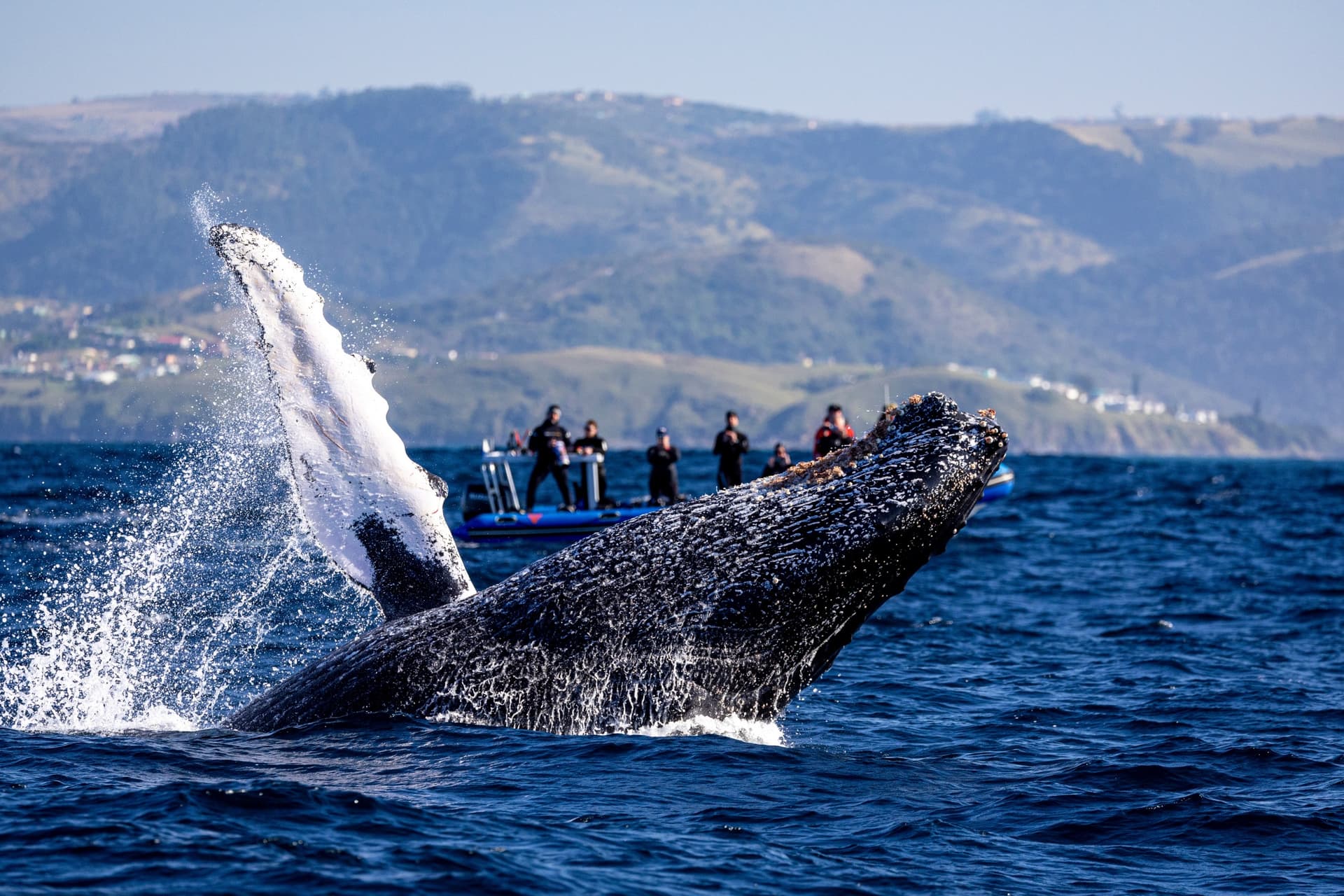
Want to see whales up close? In that case, consider booking a whale-watching boat cruise. Many companies organize boat excursions to admire the whales' display. You'll see them breach out of the water, leap, perform spectacular acrobatics and, with a bit of luck, observe calves alongside their mothers!
While there are laws and rules to follow for whale watching in South Africa, make sure you choose an operator that respects animal welfare (see end of article).
Kayaking expedition

For the more adventurous, it's also possible to rent a kayak to explore South Africa's coastline and perhaps come face-to-face with a whale! But be careful: not only are these encounters unpredictable, but you also won't be able to approach whales as you might wish. The law prohibits approaching whales closer than 300 meters.
If whale watching by kayak interests you, we strongly recommend choosing a guided kayak expedition with a local guide. Don't hesitate to contact us to help you organize your expedition!
What is the best time to see whales in South Africa?
As mentioned earlier, South Africa is home to both resident and migratory whale species. You can see Bryde's whales year-round as well as other cetaceans like dolphins.
For migratory whales, you'll need to plan your visit during migration season. These whales come to South African waters to breed and give birth before heading back to Antarctica.
Here is the best time to see whales in South Africa according to species:
When to see humpback whales in South Africa?

The best time to see humpback whales in South Africa is from May to December, with peak viewing between June and August.
When to see southern right whales in South Africa?

The best time to see southern right whales in South Africa is the southern winter, from June to November.
Are there rules to follow for whale watching in South Africa?
Whales and dolphins are protected by law in South Africa. You'll find all the details in the TOPS Marine Species Regulations. Among the protective measures, it's important to know that the regulations prohibit any unauthorized person or vessel from approaching cetaceans closer than 300 meters. Furthermore, operators must follow a number of behaviors: don't approach cetaceans already surrounded by other boats, limit time spent with them, take extra precautions when calves are present, etc.
Of course, other rules of conduct must be followed to observe whales without harming them:
Don't swim alongside cetaceans,
Don't feed them,
Don't touch them,
Don't spend too long in their company,
Leave quietly if you find yourself near a cetacean in your kayak or boat…
How to choose an ethical and cetacean-friendly boat tour?
Although there are rules for whale watching in South Africa, there are always those who skirt them. That's why we strongly recommend choosing a recognized and certified operator if you want to take a boat tour. To ensure you make an ethical choice, the International Whaling Commission offers a series of questions to ask the operator directly to make sure they comply with the rules and animal welfare standards.
As the global body responsible for whale conservation and the management of whaling explains:
"By asking these questions directly to operators when booking by email or phone, or when visiting their office, you demonstrate that consumers value responsible behavior and encourage operators to offer more than just the thrill of getting close to whales or dolphins in nature."
Discover the questions to ask when booking a whale-watching tour provided by the International Whaling Commission.
Need help organizing your trip to South Africa and meeting whales in person? Don't hesitate to contact us to organize your trip and plan your itinerary based on your wishes and budget.
Frequently asked questions
The best time to see whales in Hermanus is the southern winter, between June and November. This is when southern right whales come to breed in Walker Bay, offering spectacular sightings from the shore.
Yes, South Africa is one of the world's best destinations for land-based whale watching. In Hermanus, the Cliff Path and Walker Bay Trail offer excellent viewpoints. The town even has a 'whale crier' who signals whale presence by blowing a horn.
South Africa's waters are home to around thirty cetaceans. The most commonly observed species are the southern right whale, humpback whale, Bryde's whale and minke whale. The blue whale is rarer. Some, like Bryde's whale, are present year-round.
South African regulations (TOPS Marine Species Regulations) prohibit any unauthorized person or vessel from approaching cetaceans closer than 300 meters. Licensed operators must also follow strict rules regarding observation duration and the presence of other vessels.
The Whale Route is a coastal itinerary connecting Pringle Bay to the village of Arniston, between the Cape Peninsula and the Garden Route. It includes several whale-watching spots, including Hermanus, Betty's Bay, Kleinmond and Stanford.
Yes, you can rent a kayak to explore the coast and potentially see whales. However, you must respect the mandatory 300-meter distance. It is strongly recommended to book a guided kayak expedition with a local guide for a safe and responsible experience.