Knysna
Knysna
Knysna stretches between lagoon and forest along South Africa's Garden Route. The Heads, oysters from the lagoon, the forest trails of Diepwalle and the last forest elephants of South Africa make it an essential stop.
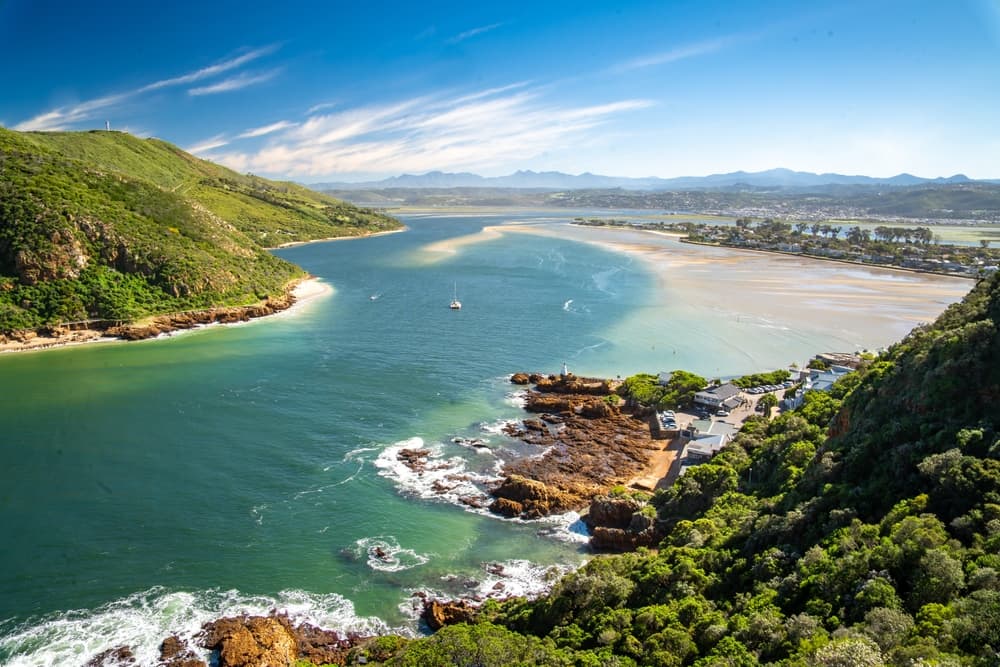
Knysna stretches between lagoon and forest along the Garden Route, midway between George and Plettenberg Bay. The town is known for its Heads — two sandstone cliffs flanking the entrance to the lagoon — and its afrotemperate forests, among the densest in South Africa. Craft market, renowned oysters, forest trails: Knysna combines nature and local life without excessive tourist artifice.
Quick practical information
- Access: on the N2, approximately 70 km east of George and 30 km west of Plettenberg Bay.
- Nearest airport: George Airport (code GRJ), with connections to Johannesburg and Cape Town.
- Recommended duration: 2 to 3 days to combine lagoon, forest and town.
- Best season: September to April — spring and southern summer, less rain than in winter.
- Accessibility for persons with mobility challenges: the lagoon waterfront is accessible; forest trails are on natural terrain, often challenging.
What to see
Knysna lagoon is the heart of the town. The Heads, two rocky promontories, define its opening to the Indian Ocean. Knysna Waterfront groups restaurants, galleries and markets along the water. Knysna forest, part of Tsitsikamma and the Garden Route National Park, is home to giant yellowwood trees and the last forest elephants of South Africa — discreet and rarely observed.
History and context
The name comes from Khoikhoi and means roughly "place of wood". Forest exploitation structured the local economy from the 19th century onwards; woodcutters left a strong cultural imprint. The forest is now protected. In June 2017, forest fires ravaged part of the region, destroying hundreds of homes; the town has since rebuilt.
Highlights of your visit
The Heads
These red sandstone cliffs dominate the entrance to the lagoon. The view from the promontory is striking: turquoise water on one side, open ocean on the other. A walking trail connects the two viewpoints. Access to the eastern side (Eastern Head) passes through private property; check access conditions on site.
The lagoon and its water activities
Kayaking, catamaran cruises, paddleboarding: the lagoon lends itself to numerous activities. Local operators offer outings from the Waterfront. Fishing is also practised, subject to permits.
Knysna forest
The Diepwalle section, within the Garden Route National Park, offers several marked loops through yellowwood and stinkwood forests. This is the most visited area to attempt spotting traces of forest elephants — a population estimated at fewer than ten individuals.
The oyster market
Knysna is renowned for its farmed oysters, cultivated in the lagoon. The Knysna Oyster Festival, held each year in July, attracts visitors from across the country. Outside the festival, several Waterfront restaurants serve fresh oysters.
The Waterfront and local crafts
The lagoon waterfront concentrates art galleries, craft shops and restaurants. The Saturday morning market offers local produce and creations from artisans in the region.
Photography tips
The Heads are best photographed early morning or late afternoon, when raking light accentuates the cliff relief. For the lagoon, a boat excursion offers angles impossible from shore. In the forest, light filtering through the canopy is optimal between 9 am and 11 am.
Location and access
Knysna is located on the N2, the main axis of the Garden Route. George, to the west, is the nearest town with a regular airport. Plettenberg Bay is approximately 30 km to the east. There is no regular public transport between Garden Route towns; a rental car remains the most practical option. Private shuttles connect George Airport to Knysna.
Nearby attractions
- Plettenberg Bay — beach resort 30 km away, known for its beaches and whale watching in season.
- Tsitsikamma National Park — coastal forests, Storms River gorges and the famous Storms River Mouth suspension bridge.
- Wilderness — lakes and lagoons to the west, a paradise for birdwatchers and kayaking enthusiasts.
- George — service town with airport, departure point for the Outeniqua Choo-Tjoe (historic train, variable service).
Frequently asked questions
From September to April, the weather is drier and temperatures are pleasant. July coincides with the Knysna Oyster Festival, very busy but during southern winter, with risks of rain.
The population is estimated at fewer than ten individuals, extremely discreet. Observing them is very rare. However, you may find tracks and droppings on the Diepwalle trails.
Western Head is accessible by car or on foot from the town centre. Eastern Head passes through private property (Featherbed Nature Reserve); access is generally via a boat excursion from the Waterfront.
Yes. The Garden Route has no reliable public transport network between towns. A rental car from George Airport is the most practical solution.
Several Waterfront restaurants offer fresh oysters from the lagoon year-round. The Knysna Oyster Festival in July concentrates tastings and events around this product.
Yes. The calm lagoon suits water activities with children, the Waterfront is accessible, and the short forest trails at Diepwalle are manageable from age 6-7 onwards.
Want to discover this destination?
Our local advisors design your tailor-made trip.