Stellenbosch Wine Route
Stellenbosch Wine Route
Located 50 km from Cape Town, the Stellenbosch Wine Route winds through valleys planted with Chenin Blanc, Pinotage and Cabernet Sauvignon. Historic estates, boutique cellars and gastronomic restaurants make up an itinerary for a day trip or weekend getaway.
About thirty kilometres east of Cape Town, Stellenbosch is the historic heart of South Africa's wine country. Its estates stretch across valleys framed by mountains, planted with century-old oak trees. The wine route connects family-run cellars and grand estates, all accessible as a day trip. It is here that South African Chenin Blanc, Pinotage and Cabernet Sauvignon have forged their international reputation.
Practical information at a glance
- Access: rental car recommended from Cape Town; shuttles and organised tours depart daily from the city.
- Recommended duration: a full day to visit 3 to 5 estates; a weekend to explore multiple valleys.
- Driving: designate a sober driver or opt for a driver/guided tour — South African law is strict on drink-driving.
- Dress code: casual; some estate restaurants apply smart casual dress code in the evening.
- Season: open year-round; most cellars close on Sunday afternoons or all day Sunday.
What to see
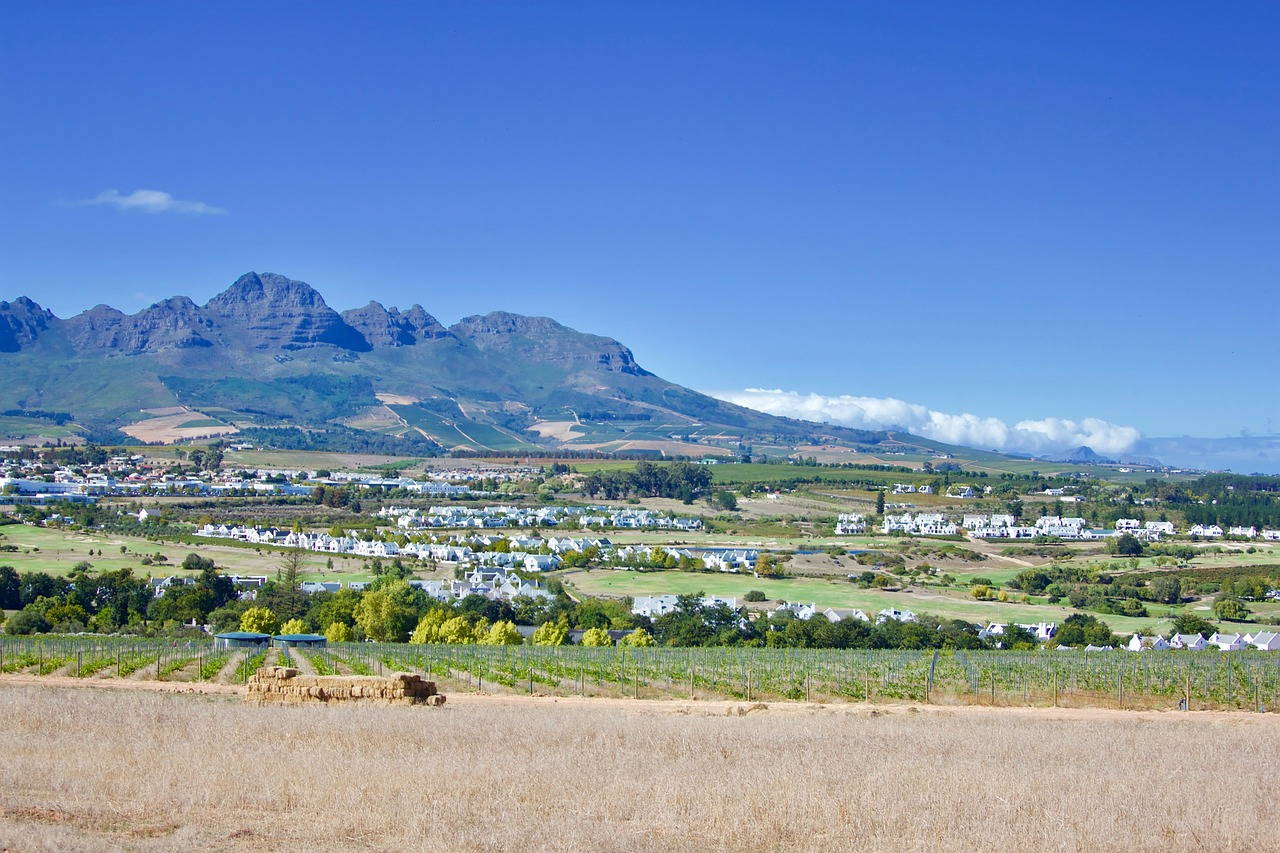
The route passes through several distinct valleys: Stellenbosch Valley, Jonkershoek, Bottelary Hills and Simonsberg, among others. The landscapes alternate between neat rows of vines, Cape Dutch gabled farmhouses and granite peaks. Each estate offers its own tastings, often accompanied by cheese platters or gastronomic meals.
History and context
Stellenbosch is South Africa's second-oldest city, founded in 1679 by governor Simon van der Stel. Viticulture developed there from the late 17th century, driven by the arrival of French Huguenots in neighbouring Franschhoek. Pinotage, a hybrid varietal created in 1925 at Stellenbosch University, is today the emblem of South African wine.
Highlights of the visit
Historic grand estates
Properties such as Vergelegen, Rust en Vrede and Meerlust have produced award-winning wines for generations. Their cellars and heritage gardens are worth visiting as much for the architecture as for the tasting.
Boutique and biodynamic cellars
Small producers like Reyneke and Avondale practise organic or biodynamic viticulture. Tastings are often led by the winemaker himself, in a more intimate atmosphere.
Estate restaurants
Several cellars house acclaimed dining establishments. Jordan Restaurant, Tokara and The Restaurant at Waterkloof regularly feature in national rankings. Booking is essential, especially during peak season (November–March).
Stellenbosch Wine Festival
Every February, the city hosts one of South Africa's largest wine festivals, with tastings, masterclasses and entertainment in the historic centre.
Photography tips
The golden light of late afternoon on the vines and mountains is ideal between 4 pm and 6 pm. The white Cape Dutch gabled facades photograph best in the morning, before the sun gets too high. Always ask permission before photographing inside cellars or during private tastings.
Location and access
Stellenbosch is located in the Western Cape province, approximately 50 km from Cape Town via the N2 highway and then the R310. Trains connect Cape Town to Stellenbosch (Metrorail line), but a car is essential to reach estates outside the town centre. Local agencies offer guided minibus tours with driver, a practical solution to avoid driving constraints.
The Franschhoek and Paarl valleys are accessible in less than 30 minutes from Stellenbosch and naturally complement the wine route.
Nearby attractions
- Franschhoek — Huguenot village with Michelin-starred restaurants and renowned estates, about twenty kilometres away.
- Paarl — another major wine region, known for its cooperative cellars and the Afrikaans Language Monument.
- Cape of Good Hope — spectacular nature reserve, about an hour's drive south.
- Cape Town — ideal base for exploring the entire wine region, with Table Mountain and historic neighbourhoods.
Frequently asked questions
The region is pleasant year-round. The Southern Hemisphere summer (November–March) offers warm, sunny weather, ideal for picnics among the vines. The harvest season (February–April) is particularly lively. Winter (June–August) is quieter and wetter, but cellars remain open and accommodation prices drop.
For major estates and cellar restaurants, booking is strongly recommended, especially during peak season and weekends. Some cellars accept walk-in visits on weekdays, but it's best to check directly with each property.
Local agencies offer guided minibus tours with driver departing from Cape Town or Stellenbosch. The Vine Hopper, a tourist shuttle, serves several estates on a fixed circuit. This is the most practical solution for tasting without the driving constraint.
It's possible but ambitious. It's better to spend half a day at each destination, or plan two days to fully enjoy both valleys without rushing.
Most estates charge for tastings, with prices varying according to the number of wines and package chosen. Some will waive the fee if you make a purchase. Check directly with each cellar.
Several estates offer green spaces, games or family activities. Cellar restaurants generally welcome children. Check the policy of each property before you visit.
Interested in this visit?
We can include it in your personalised itinerary.