Cape Town and Western Cape
A peninsula between two oceans, seventeenth-century Huguenot vineyards and the Cape Malay quarter of Bo-Kaap, all within less than an hour's drive from Cape Town's city centre.
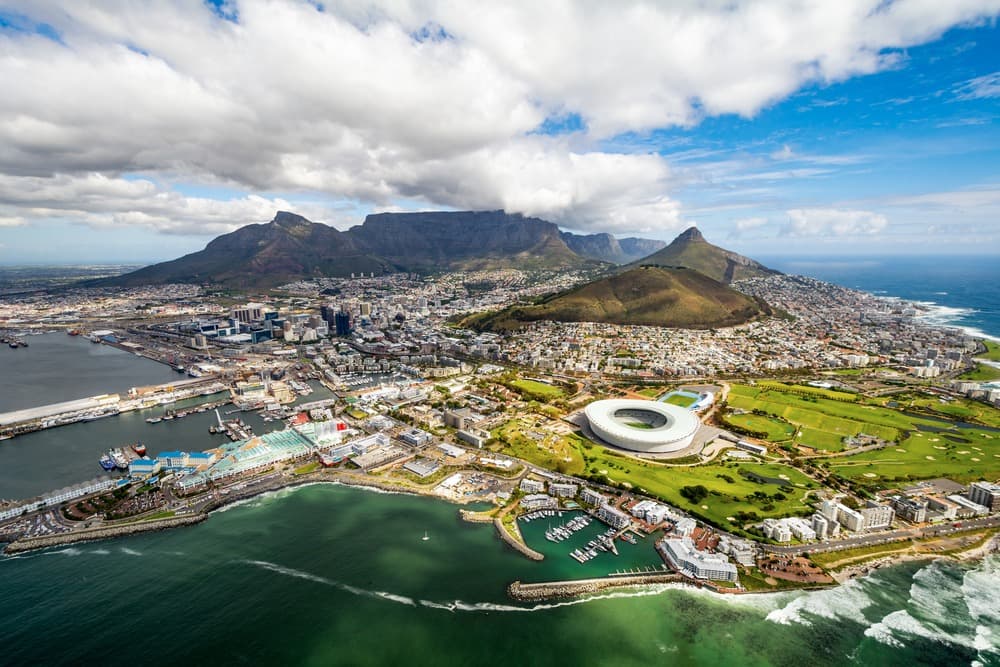
Cape Town occupies a narrow peninsula wedged between the cold Atlantic waters of the Benguela Current to the west and the milder False Bay to the east. At its centre, Table Mountain rises to 1,086 metres, its sandstone plateau extending southward through twelve dramatic peaks—the Twelve Apostles—down to the Cape of Good Hope. This compact geography explains why you can, in a single day from the city centre, hike Lion's Head at sunrise, lunch at Kalk Bay and observe African penguins at Boulders Beach.
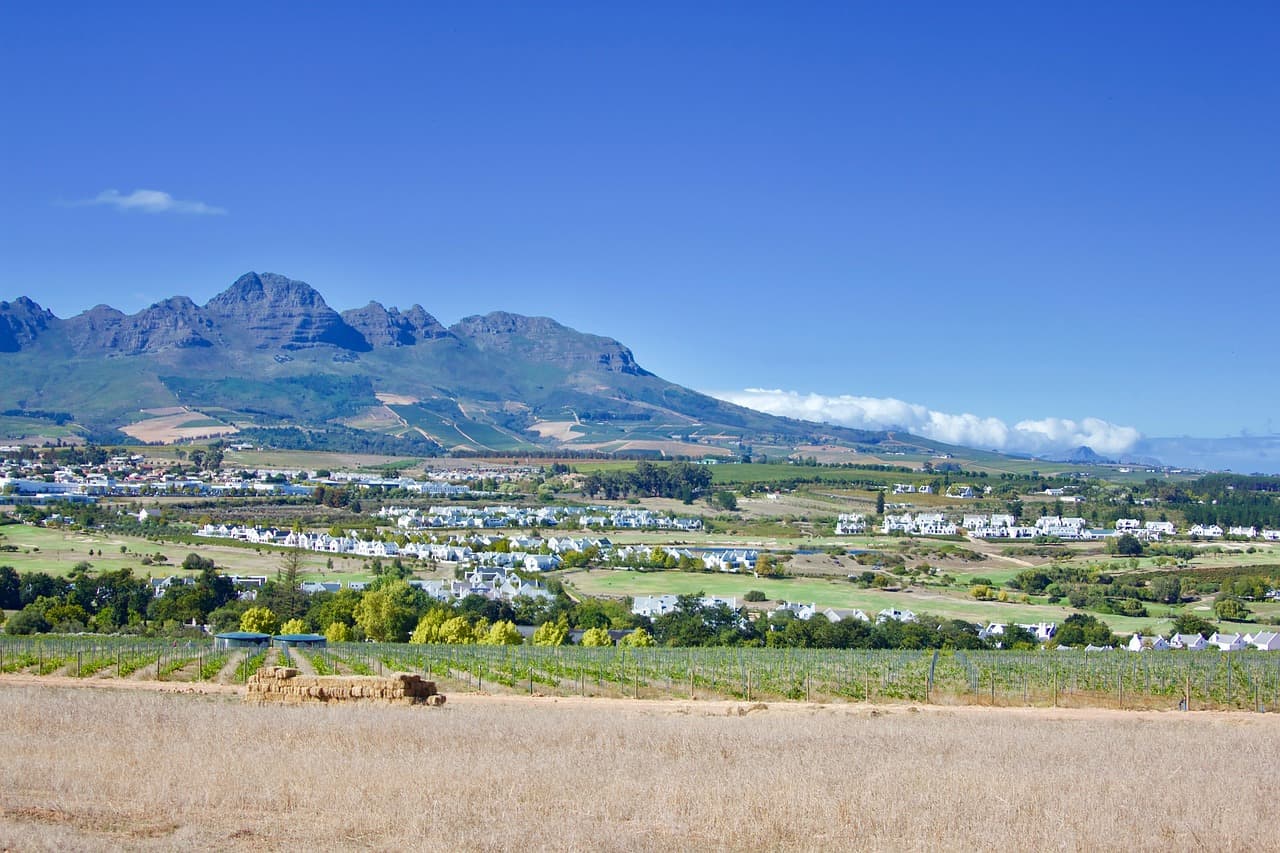
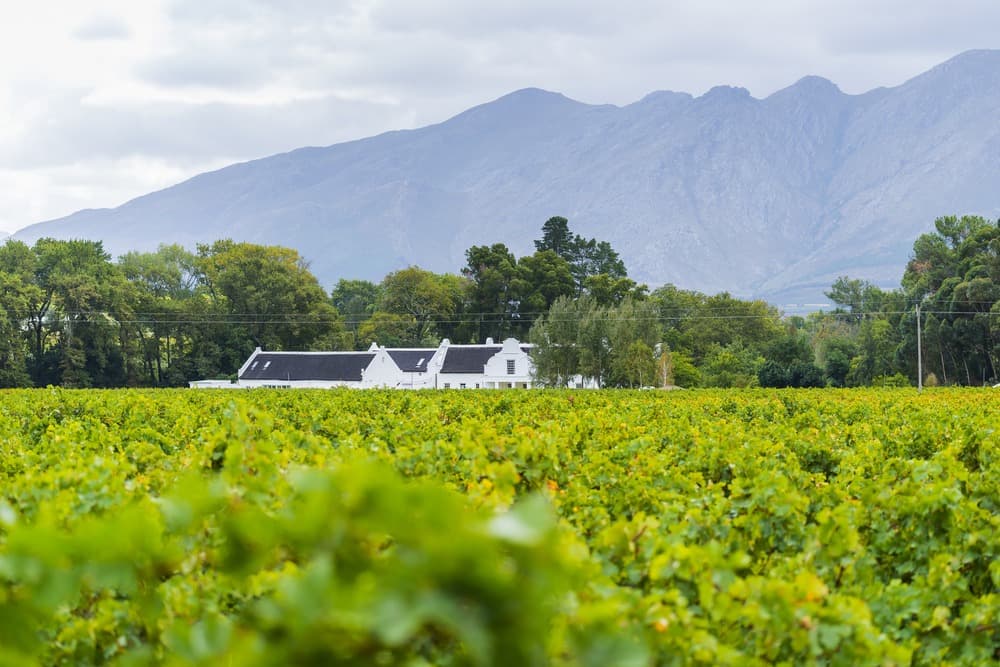
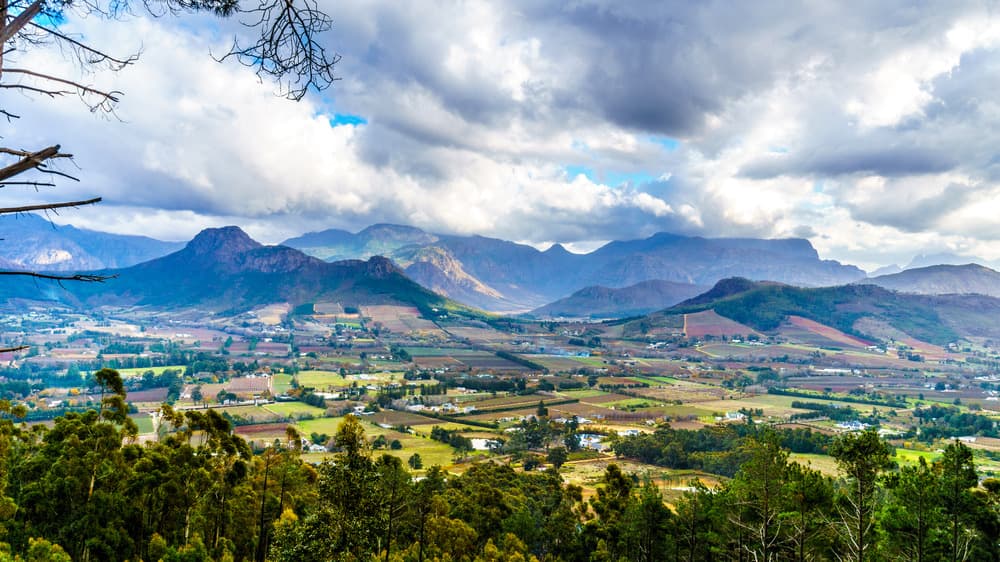
Western Cape province extends far beyond the city. To the east, beyond Sir Lowry's Pass, lie the wine valleys of Stellenbosch, Franschhoek and Paarl, planted from the late seventeenth century by French Huguenots. The decomposed granite and sandstone soils now bear chenin blanc, pinotage and chardonnay, and several estates such as Boschendal and Vergelegen preserve their original Cape Dutch architecture. Further north, the West Coast stretches toward Namaqualand, which erupts in wildflowers each year between mid-August and mid-September.
Cape Town is also a genuinely multicultural city. The Cape Malay community, descended from slaves and political prisoners brought from Indonesia and Malaysia by the Dutch East India Company, still lives in the Bo-Kaap quarter, with brightly painted facades at the foot of Signal Hill. Its cuisine—bobotie, bredies and samoosas—can be tasted in family homes that our team arranges by reservation. At District Six, the museum tells the story of forced removals in 1968, when 60,000 residents were displaced to the Cape Flats under apartheid.
The climate is Mediterranean, a rarity in sub-Saharan Africa. Summers (December to March) are dry, hot in the wine-growing interior where temperatures regularly exceed 30°C, and temperate on the coast where the south-easterly wind, the Cape Doctor, cools the air and clears the skies. Winters (June to August) bring rain, around 100 mm per month in the city, and relative cold (8 to 17°C) that occasionally whitens the peaks of the Cape peninsula.
The local economy rests on three pillars visible to any visitor: viticulture, tourism and fishing. Kalk Bay harbour still sells fresh snoek on the quay each morning, and Hout Bay trawlers supply markets with Cape rock lobster and hake. Inland, the fynbos—this endemic shrubland rich with over 9,000 plant species—covers the entire Cape Floral Region, a UNESCO World Heritage site. It is one of six floral kingdoms in the world, and the smallest by area.
For those entering South Africa via Cape Town, the region offers a gentle transition. Distances are manageable, hotel infrastructure ranks among the country's finest, and the diversity of landscapes—urban, viticultural, coastal and mountainous—allows you to vary your pace without requiring long transfers.
To discover
Table Mountain ascent. Access via rotating cable car from Tafelberg Road, or a 2.5-hour hike through Platteklip Gorge. From the summit, views of Robben Island, where Mandela was imprisoned for 18 years, and the Camps Bay basins.
Stellenbosch and Franschhoek wine route. Tastings at estates such as Spier, Tokara or Babylonstoren, lunch in the gardens of La Petite Ferme with valley views. Our team combines the day with a stop at Drakenstein, Mandela's former prison.
Cape of Good Hope and Boulders Beach. Cross the peninsula via Chapman's Peak Drive, a 9 km cliff-side road, to the Cape national park, where chacma baboons and ostriches roam the beaches. Return via the colony of 3,000 African penguins at Simon's Town.
Bo-Kaap and Cape Malay cuisine. Walk through the colourful streets of the Muslim quarter, visit the Auwal mosque dating from 1794, then take a cooking class with a family on Wale Street to learn how to fold a samoosa and prepare bobotie.
Cape Point and endemic fynbos. Trail to the old lighthouse at 249 metres above the ocean, panoramic views of the theoretical meeting point of the two currents. The reserve shelters 1,100 fynbos species across 7,750 hectares, including proteas in flower from May to August.
When to go
We recommend October to April, corresponding to the southern spring and summer. Temperatures range from 18 to 28°C in the city, days are long (sunset at 8 pm in January) and the vineyards are in full activity, with harvest in February and March. The south-easterly wind can blow strongly between December and February, sometimes at 50 km/h on the peninsula, which can complicate Table Mountain climbing on certain days: the cable car closes in high winds. January is the busiest month, with significant South African holiday crowds.
Winter, from June to August, should not be dismissed. Rain concentrates on these months (80 to 110 mm monthly), temperatures drop to 8°C at night and peak around 17°C during the day, but the light is beautiful, hotel rates fall by 30 to 40 per cent, and it is whale season for southern right whales off Hermanus, 1.5 hours' drive to the east. September, emerging from winter, combines Namaqualand wildflowers, lingering whales and increasingly mild temperatures.
Practical advice
We recommend a minimum of four nights: two for Cape Town proper and the peninsula, two for the wine regions with accommodation in Franschhoek or Stellenbosch. Five to six nights allow you to add Hermanus for whales (June to November) or a day in Cape Point reserve. Cape Town's international airport is 20 minutes from the centre, with direct flights from Europe and frequent domestic connections to Johannesburg, Port Elizabeth and Durban.
The region combines naturally with the Garden Route on a self-drive eastward (allow 7 to 10 days to reach Port Elizabeth via Oudtshoorn and Knysna), or with the Karoo and Cederberg for travellers drawn to semi-arid landscapes and San rock art. For a first visit to South Africa, we often complete the circuit with a flight to the Kruger and the private reserves of Sabi Sand. Hotel comfort is high, from charming guesthouses to upmarket wine lodges. The region suits all travellers: families with children (False Bay beaches, penguins, farm visits), hikers (Table and Cederberg trails), food and wine enthusiasts, and those seeking contemplation.