Tsitsikamma National Park
Tsitsikamma National Park
Ancient forest, coastal cliffs and deep gorges: Tsitsikamma National Park is the highlight of the eastern edge of the Garden Route, between legendary hikes and a protected marine reserve.
Tsitsikamma National Park stretches along the southern coast of Afrique du Sud, between Humansdorp and Plettenberg Bay, in the Garden Route region. It protects a band of dense temperate forest, cliffs battered by the Indian Ocean, and the mouth of the Storms River. It is one of the country's most spectacular coastal parks, renowned for its hiking trails, deep gorges, and marine biodiversity.
Quick facts at a glance
- Entrance: paid admission (SANParks ticket, separate rates for residents and non-residents)
- Access: by car from the N2 (Garden Route); no regular public transport to the main entrance
- Recommended duration: a full day minimum; two to three days for hikers
- What to bring: hiking shoes recommended, waterproof clothing (frequent rain year-round)
- Accessibility: limited on trails; some coastal areas and the suspension bridge are accessible on foot from the main parking
What to see there
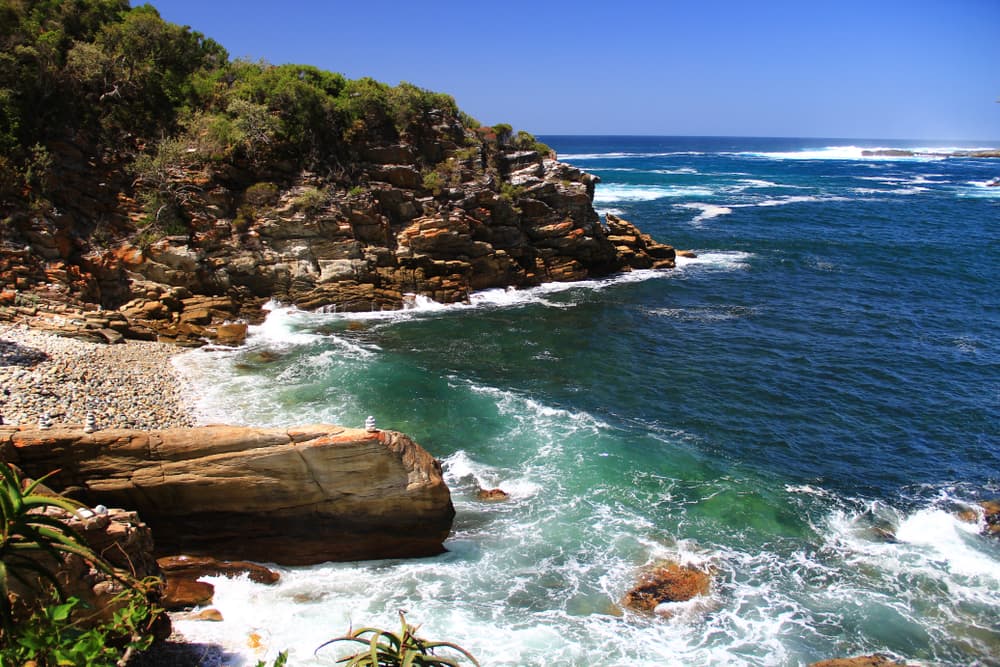
The Tsitsikamma Forest is one of the oldest temperate forests in southern Africa. Centuries-old yellowwoods—South Africa's national tree—dominate the canopy. The coast alternates between volcanic cliffs, isolated coves, and pebble beaches. Beneath the surface, a protected marine reserve shelters corals, fish, and Cape otters.
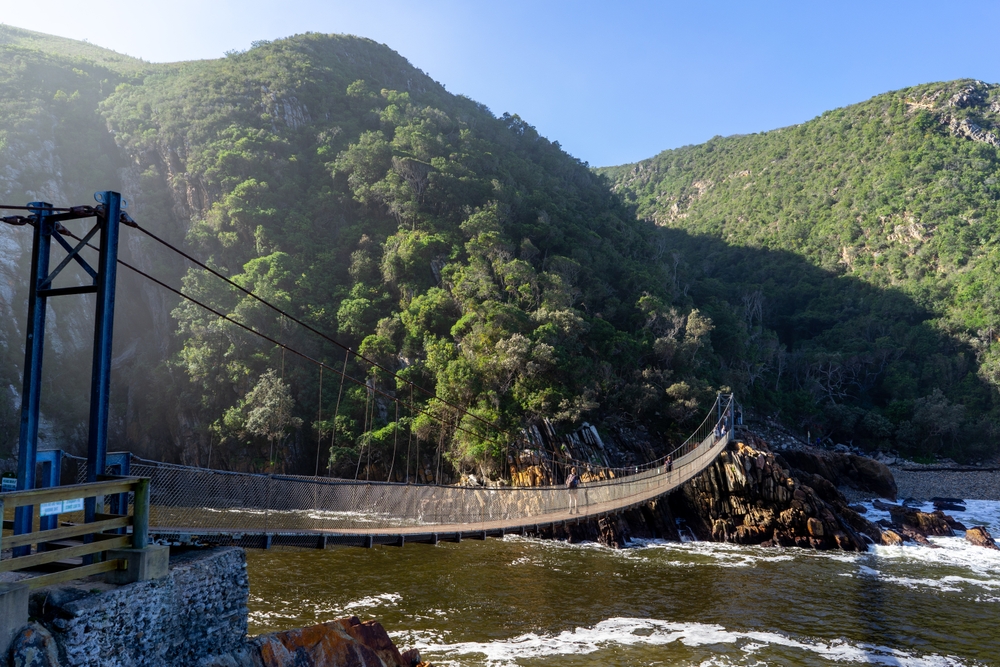
The Storms River carves a narrow gorge before flowing into the ocean. The suspension bridge at its mouth offers a direct view of turquoise waters and rocky walls. Whales and dolphins are regularly spotted from the coastal vantage points.
History and context
Tsitsikamma is a Khoikhoi word meaning "abundant waters" or "place where water shines." The park was established in 1964, becoming one of Africa's first protected marine reserves. Today it is part of the SANParks (South African National Parks) network and is integrated into the Garden Route National Park natural corridor.
Highlights of the visit
The Otter Trail
This five-day trail follows the coast for approximately 42 km, from Storms River Mouth to Nature's Valley. Considered one of South Africa's finest coastal trails, it requires advance reservation with SANParks. Overnight stays are in basic shelters.
The Storms River Mouth suspension bridge
Accessible from the main campground in under thirty minutes on foot, this bridge spans the river mouth at a low height. The view of the gorge and ocean is breathtaking. It is the starting point for several marked short hikes.
The Dolphin Trail
A guided and more comfortable alternative to the Otter Trail, this two-night route includes baggage transport and lodges with sea views. It suits hikers who wish to explore the coast without heavy logistics.
Diving and snorkeling
Tsitsikamma's marine reserve is one of the country's richest. Local operators offer diving excursions in the cold but clear Indian Ocean waters. Visibility and species diversity make it a favored site for experienced divers.
Photography tips
Morning light is ideal on the suspension bridge, before sea mist rises. Coastal cliffs photographed from high trails yield the best angles on waves and gorges. The dense forest photographs best in overcast conditions, which soften contrasts. There are no particular photography restrictions in areas open to the public.
Location and access
The park's main entrance (Storms River Mouth) lies approximately 70 km east of Plettenberg Bay and an hour's drive from Knysna, via the N2. The town of Storms River Village, outside the park, offers accommodation and restaurants a few kilometers away. There is no regular bus service to the park entrance; a rental car remains the most practical option from George or Port Elizabeth (Gqeberha).
Nearby attractions
- Plettenberg Bay — lively seaside resort with fine sandy beaches and whale watching in season.
- Knysna — lakeside town renowned for its oysters, forests, and protected lagoon.
- Nature's Valley — remote village at the western end of the Otter Trail, surrounded by forest and lagoon.
- Bloukrans Bridge — highway bridge home to the world's highest commercial bungee jump, a few kilometers from the park.
Frequently asked questions
The park is open year-round. Southern hemisphere summer months (November to February) are the warmest and busiest. Spring (September-October) offers lush vegetation and fewer crowds. Rain can fall in any season; always bring a waterproof jacket.
Yes. The Otter Trail is one of southern Africa's most sought-after hikes. SANParks reservations open one year in advance and spots fill quickly, especially for weekends and school holidays.
Yes. From Storms River Mouth parking, a short and well-marked trail leads to the suspension bridge in under thirty minutes. It is accessible to most visitors, including children and those unaccustomed to hiking.
Absolutely. Tsitsikamma marks the eastern end of the Garden Route. A classic itinerary links George, Wilderness, Knysna, Plettenberg Bay, and Tsitsikamma in five to seven days by rental car.
Tsitsikamma's waters are cold and sometimes rough. Diving is suited for certified divers. Snorkeling in sheltered areas is possible for comfortable swimmers, but check with local operators about conditions on the day.
Yes. SANParks manages a campground and chalets at Storms River Mouth, directly within the park. These accommodations are highly sought after and must be reserved in advance on the SANParks website.
Interested in this visit?
We can include it in your personalised itinerary.